
By: M.K. Bryant
College Night is the University of Montevallo’s homecoming celebration. In “Images of America: Montevallo,” College Night is Described as “the most distinct and notable tradition of the school since 1919.”
The most prominent part of College Night is the one-act musicals that are performed by the Gold and Purple sides. The tradition of these musicals first began during College Night 1950.
College Night was not always split between the Gold and Purple sides that we know today.
According to the 2020 College Night program, the competition was initially split between the four classes. The Purple and Gold sides did not exist until 1921– two years after the first College Night.
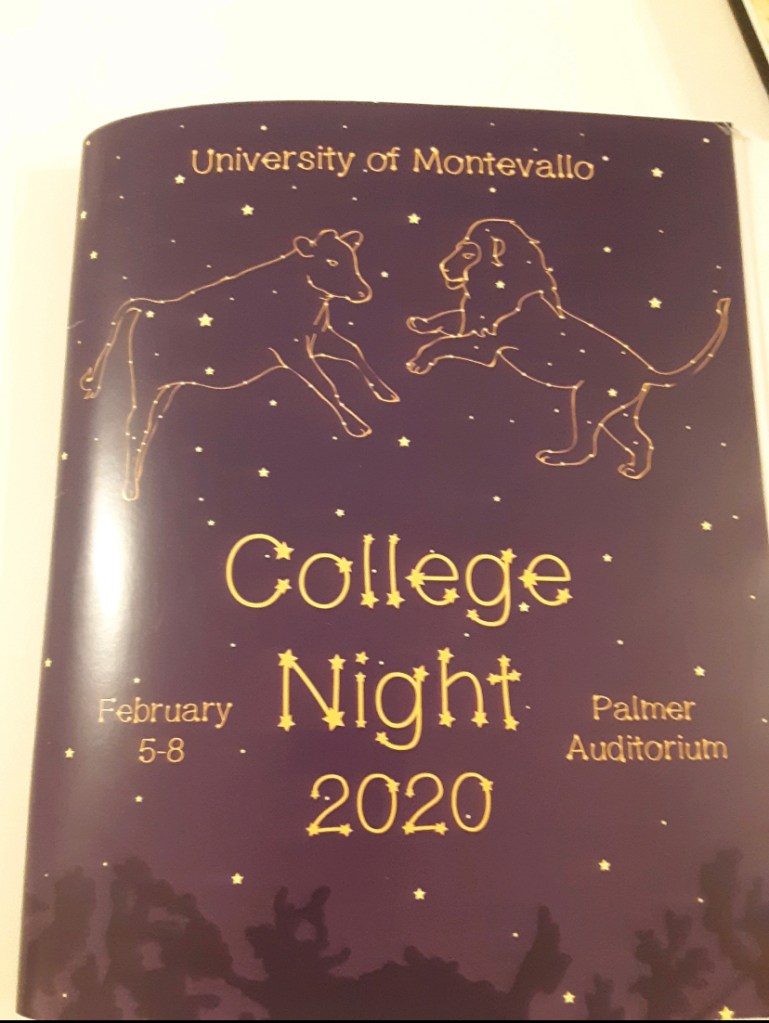
Students could not choose their preferred side until 1953. Prior to College Night 1953, students were assigned their side.
Each side creates a production book in order to curate every aspect of the show, including script, scores and artistic design. These books serve as archives of past College Night shows.
The events of College Night have changed locations throughout the years. When it first started in 1919, College Night was held in the dining hall. In 1930 it was moved to Palmer Hall, where it remains to this day.
Palmer Hall, pictured in the attached Storysphere, is the home to a 1,200-seat auditorium where the College Night shows are held in February each year.
Since 1930, the only year that College Night has not been held in Palmer Auditorium is 2007. Due to renovations, the event occurred in the McChesney Student Activity Center.
Not only were the one-act musicals introduced in the early 1950s, but the side songs were written as well.
The Gold Side song was written by Bobbie Long, and the Purple Side song was written by Margaret Utley.
Although the official side songs have been slightly altered over the years, they remain a long lasting tradition to this day.
Athletics, another popular aspect of College Night, were not introduced until 1929. The first sport to be introduced to College Night was field hockey.
College Night has a rich history and has even been referred to as a “Local Legacy” by the Library of Congress. As time goes on, its traditions continue to change.
 Vallo Vision News