
By: Madelyn Alexander, Vallo Vision News
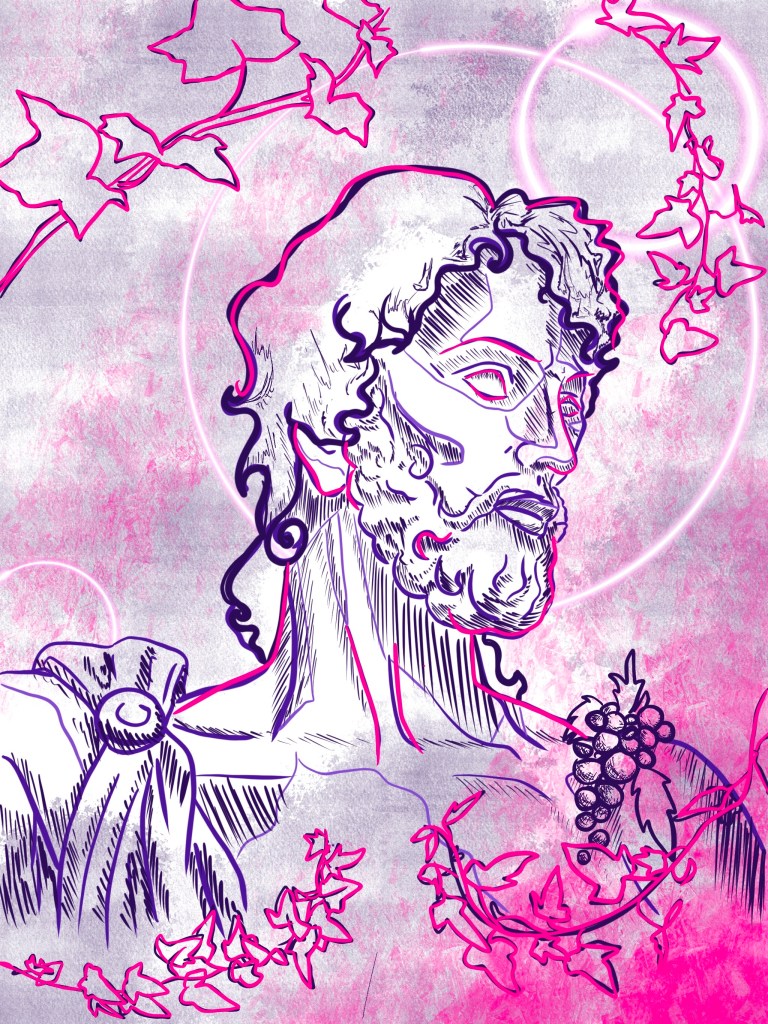
Mary Campbell, a digital artist and graduate student of art education at the University of Montevallo, never expected to see her art for sale as an NFT. She certainly did not expect it to be done at the hands of another person without her permission.
“There are so many things in the art world that are not about the art and it’s not about the artist, it’s about making a profit,” said Campbell.
NFT stands for “non-fungible token,” which means that they are not represented by equivalent values and tangible currency. Their value exists only online and on an individualized level.
Campbell says a friend contacted her on social media asking about the work posted as an NFT. Campbell explained she had not posted her artwork as an NFT, and she did not give permission to anyone else to do so. The friend sent Campbell the post in question, which linked to the NFT website Rarible.com.
Campbell says she did not know the person who posted her art. She says she found him on social media and asked him to remove the post.
Campbell says he told her he posted her art on the website, but had no intention of selling it. According to Campbell, however, the piece was listed with a value of half an Ethereum, equivalent to about $1,200, and was open for bidding.
Campbell says it is dangerous being a smaller digital artist. “Somebody can see something that they think will sell, and they’ll just screenshot it, make it an NFT and sell it,” Campbell said.
She says that is exactly what happened to her. She is not pressing charges because the listing has since been taken down from social media and Rarible.com. She also did not feel as though any legal action could be taken.
NFTs and Digital Theft
For many artists, having their work stolen is a nightmare because unless a copyright record has been filed beforehand, there is no legal action that can be taken.
NFTs have existed since 2014, but have recently been stirring up conversations about ethics and the environment.
This idea of “digital scarcity,” or the uniqueness of NFT values, has caused the perception that NFTs are in high demand. Additionally, anyone can create an NFT.
The “minting,” or creation, of an NFT creates a “TokenID” that tracks its ownership and transaction history. The “Token” of an NFT is technically public record just like any property record, or record of intellectual property with the U.S. Patent and Trademark Office or the U.S. Copyright Office.
The transaction of an NFT does not qualify as a transfer of the underlying copyright of the work “off-chain,” or in reality to the creator. Buying an NFT is not the same as buying the artwork, but rather buying a receipt for it. NFTs can be duplicated just as traditional art can be duplicated as prints but only with the permission of the creator.
In Campbell’s case, she would not be considered the creator because she did not have a copyright record for the artwork in question.
If she had not known the name of the person who posted her art, she would have had no way to contact them about removing the post. Creators, buyers and sellers of NFTs are, by default, completely anonymous.
DeviantArt, a public website for digital artists to display their work, began scanning the blockchain for its users’ work in fall 2021 to prevent fraudulent activity. Since then, DeviantArt has sent 90,000 alerts to its users about possible fraud. It is now monitoring about 4 million newly minted NFTs every week for fraud.
A large amount of the fraudulent posts are carried out by bots, which detect the most popular art to mint as NFTs.
OpenSea, an NFT selling website, takes a 2.5% commission from sales made on the site. Currently the site lists more than 80 million individual NFTs and more than 2 million collections. In an article from The Guardian, OpenSea claims to have taken enforcement action on 3,500 collections every week. This is 0.175% of the site’s total number of collections.
In the case of Aja Trier, an artist who found 87,000 NFTs based on her work, she never received any of the money OpenSea made on the 37 stolen works that were sold. She was able to get the other plagiarized pieces removed after taking to social media about the issue.
Working to Protect Local Artists
Campbell also took to social media to have her art taken down. She confronted the person who she says posted her art work and had them delete the listing. She did report the piece on Rarible.com but says she never heard anything back from the site. The user’s information is not being shared since no legal action was taken.
In order to protect herself and prevent someone else from profiting from her work, Campbell has considered creating her own NFTs for her art and watermarking anything she posts on her art Instagram account.
“It’s kind of aggravating because, you know, I post it so people can see it, so I don’t want it to be obstructed,” said Campbell. “I just think being a smaller artist, it’s very easy to get taken advantage of.”
Campbell’s original art can be found on Instagram, @m_art_and_design.
 Vallo Vision News