
Story by: JaMirah Borden
The Edmund Pettus Bridge opened over 80 years ago in May 1940. Henson Stephenson designed it.
The bridge itself is named after Edmund Winston Pettus. He was a Confederate general and a U.S. senator from 1897 to 1907. Pettus was also a leader in the Alabama Ku Klux Klan.
Before the bridge was opened 33 years after this death, city leaders saw this as something more significant than opening a new bridge. It was seen as a symbol of the South.
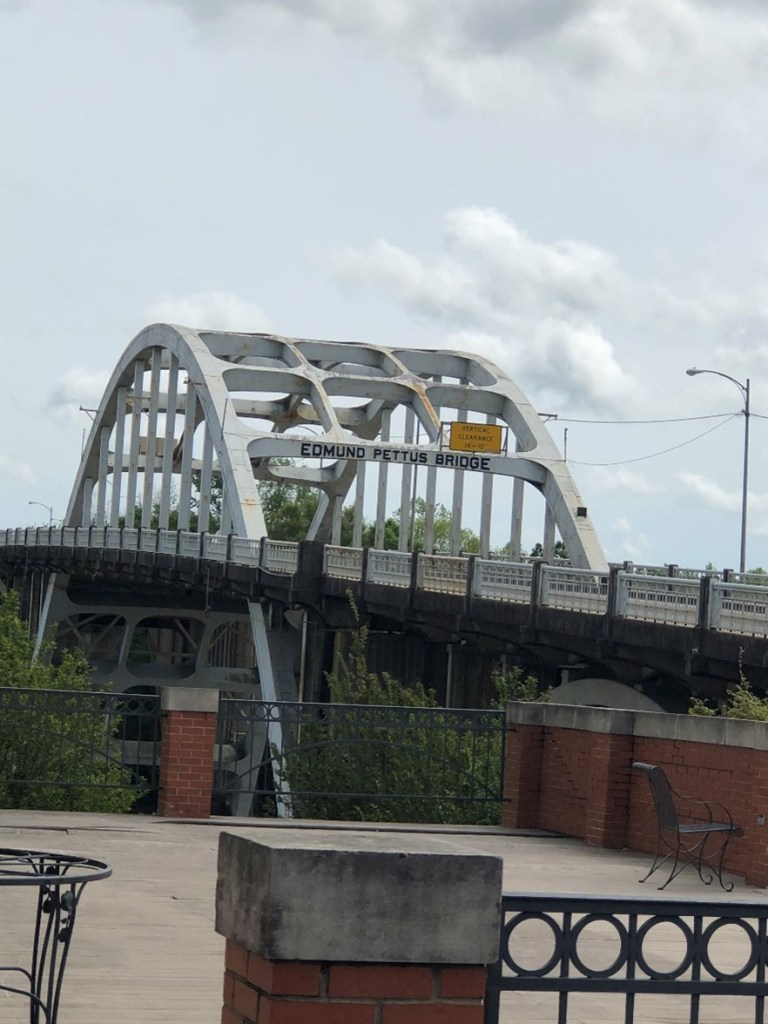
University of Alabama history professor John Giggie says, “The bridge was named for him, in part, to memorialize his history, of restraining and imprisoning African-Americans in their quest for freedom after the Civil War.”
Twenty-five years after the opening, a historical march happened during the Civil Rights Movement. Bloody Sunday was on March 7, 1965. This was the first march centered around the voting rights of African Americans.
The Edmund Pettus Bridge is in the downtown part of Selma, Alabama. It became a National
Historic Landmark in March 2013.
The bridge is the beginning of the Selma to Montgomery National Historic Trail. It was established in 1966 and memorialized the Voting Rights March in Selma. The trail is approximately 54 miles long.
More recently, monuments have been placed just outside the trail’s start. You can view them here.
Today, Bloody Sunday is celebrated annually. Selma holds the Bridge Crossing Jubilee on the first Sunday in March. This year, March 7 happened to be the first Sunday in 1965.
For the first time, the Bridge Crossing Jubilee was held virtually due to COVID-19. Many historical icons passed away in 2020. One of these was the late John Lewis.
John Lewis was the chairman of the Student Nonviolent Coordinating Committee. He and Hosea Williams started the march in the afternoon in 1965. At the time, he was only 25-years-old.
Lewis served as a Georgia Democratic congressman for 17 terms before his death. He stayed in civil rights long after the march. Also, Lewis is inspired by the Black Lives Matter Movement today.
Even though the Civil Rights Movement was over 50 years ago, Lewis still supported his people. In an article in the Washington Post, Lewis says we have to do what we can to make changes.
After John Lewis passed away in July 2020, conversations arose about changing the Edmund Pettus Bridge’s name. Many believe it should be named the John Lewis Bridge.
The great-great-granddaughter of Edmund Pettus, Caroline Randall Williams, is for this change. In a statement released by WSFA 12, Williams says, “We need to rename the bridge because we need to honor an American hero, a man who made that bridge a place worth remembering.”
A petition was created in July by Michael Starr Hopkins. He made it after learning about who
Edmund Pettus was. Shortly after, the John Lewis Bridge Project started.
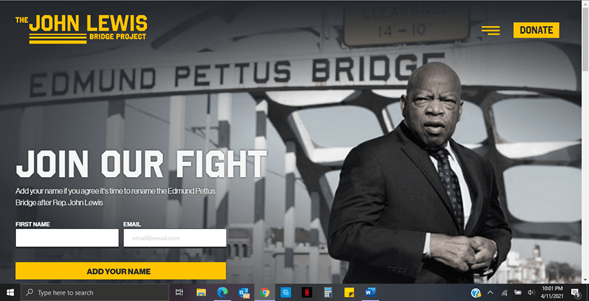
You can find additional petitions on Change.org. The earliest can be dated back to 2015.
Some Selma residents, such as Lynda Lowery, prefer that the name isn’t changed. According to the Montgomery Advertiser, she was only 14 when she marched across the bridge on Bloody Sunday. In a phone interview, Lowery says, “I left my blood and tears in the cement of that bridge.”
Felicia Moore, a Selma native, is also against the bridge’s name change. “Changing the name of the bridge is personal for me. I had personal relationships with several foot soldiers, and I don’t think there was one deserving person when so many could have had that honor,” Moore says.
The Mayor and several others agree that Selma residents should decide. According to Lowery, she would like to see the Voting Rights Act restored to honor and memorialize John.
Still today, minority groups, especially African Americans, continue to fight for their rights. The governor of Georgia, Brian Kemp, recently signed a bill that places new restrictions on how voting will take place.
President Joe Biden called this act “un-American” and “sick,” according to the Associated Press. Also, Gloria Butler called these “voter suppression tactics.” Gloria Butler is a Democratic Senate Minority Leader in Georgia.
Butler states, “We are now witnessing a massive and unabashed assault on voting rights, unlike anything we’ve seen since the Jim Crow era.”
Georgia is taking action to reopen closed wounds of more than 50 years ago. This action is sure to get reactions out from people all over the country.
The outcome of the events on the Edmund Pettus Bridge and recent events have their similarities. Only time will tell what happens over the next few years.
 Vallo Vision News