
Story By: Sarah Turner
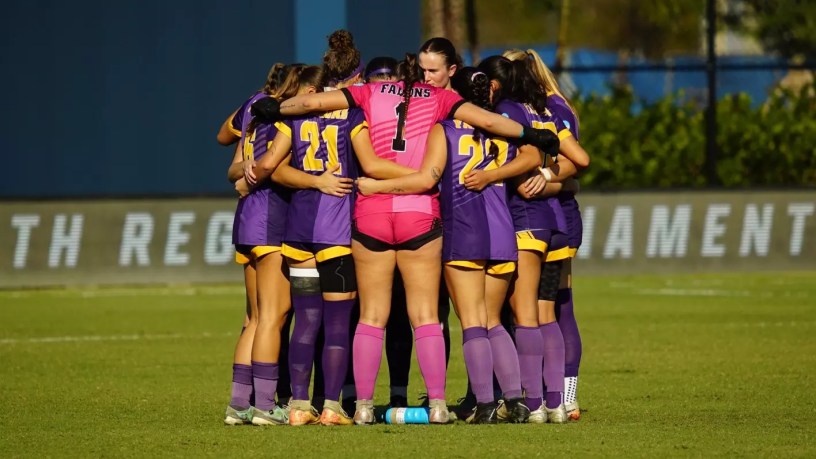
2026 marks 54 years of intercollegiate athletics for women at the University of Montevallo.
In recognition of Women’s History Month, it’s important to reflect on the athletes, coaches and advocates who laid the foundation for today’s female student-athletes, ensuring the bricks remain a place where women can compete, lead and succeed.
The Early Years
Evidence of organized athletic competition between women at the University of Montevallo dates back to the 1920s, long before the institution became coeducational in 1956.
Ironically, however, men began competing at the intercollegiate level before women did. Montevallo’s men’s programs joined the NAIA in 1966, while women’s teams did not begin intercollegiate competition until 1972.
That year, Montevallo joined the Association for Intercollegiate Athletics for Women (AIAW), which had been established in 1971 to provide championship opportunities for female collegiate athletes at a time when most NCAA and NAIA institutions did not sponsor women’s athletics.
The AIAW era at Montevallo was defined by several pioneering figures.
One of the most influential was Dr. Margaret Blalock, a 1957 Montevallo graduate who helped found the Alabama Women’s Intercollegiate Sports Association, an AIAW affiliate. Blalock was instrumental in advocating for women’s athletics in higher education and helped launch Montevallo’s first women’s intercollegiate team.
In 1972, she became the head coach of the university’s inaugural women’s volleyball team, marking the beginning of modern women’s athletics at UM.
Blalock passed away from cancer in 1989 and was inducted into the Montevallo Athletics Hall of Fame later that year as the first woman to receive the honor. Her legacy continues today through the annual Blalock Volleyball Tournament in the Birmingham area, where top high school teams from across Alabama compete each October.
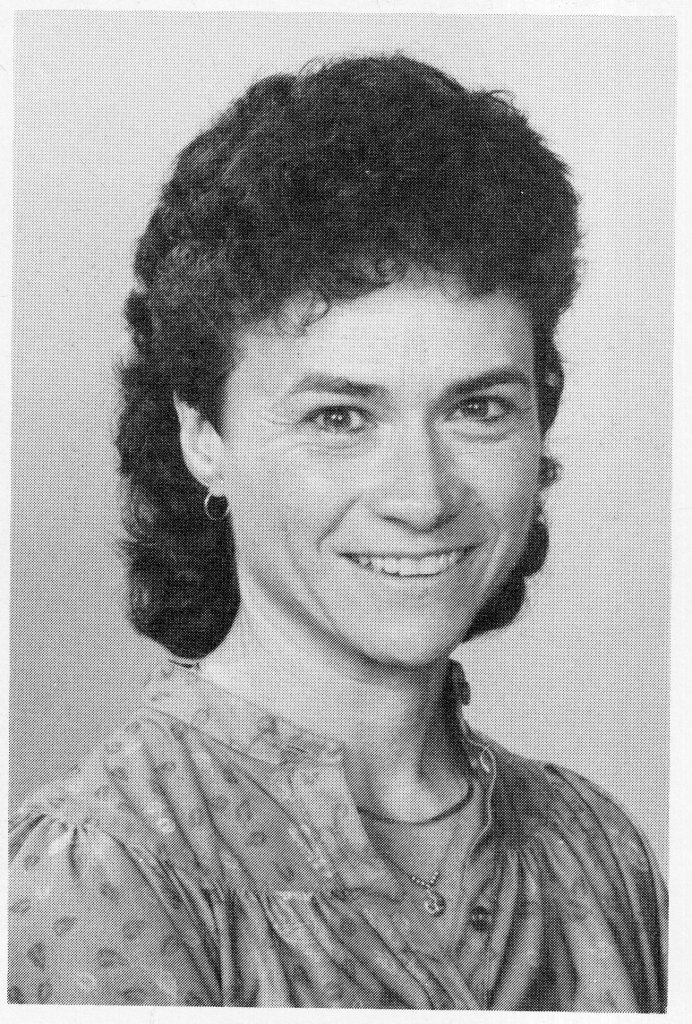
Another key figure in Montevallo’s early success was Dr. Beverly Warren.
Warren became the first head coach of the UM women’s basketball program in 1972, compiling a 13-9 record during her two seasons leading the team. In 1977, she took over the Falcon volleyball program after spending five years as an assistant under Blalock while simultaneously coaching basketball.
Under Warren’s leadership, Montevallo volleyball quickly became a powerhouse. The Falcons captured AIAW State Championships in 1979 and 1981, along with district titles in 1978, 1979 and 1981.
Making the Switch
Following the passage of Title IX in 1972, opportunities for women’s athletics at the collegiate level expanded dramatically.
In 1982, Montevallo’s women’s teams transitioned from the AIAW to the NAIA, joining the men’s programs just one year before the AIAW dissolved due to financial challenges.
The move did little to slow the Falcons’ momentum. Warren led the 1982 volleyball team to the NAIA Elite Eight, where Montevallo finished the season ranked No. 7 nationally.
One of the standout athletes of that era was Sandra Sims, who played all four years under Warren. Sims set multiple state records during her AIAW career, including 1,107 attack attempts and 414 kills during her junior season.
In her senior year, Montevallo’s first season in the NAIA, Sims became the program’s first-ever All-American.
Warren continued guiding the Falcons to national success, reaching at least the NAIA Elite Eight in each of the next three seasons before stepping down in 1986.
Both Sims and Warren were inducted into the Montevallo Athletics Hall of Fame in 1991.
Meanwhile, the Falcon women’s basketball program was building its own legacy.
Sheena Bowling emerged as one of the most dominant players in school history, earning NAIA All-American honors in all four seasons at Montevallo. As a freshman, she helped lead the 1994 Falcons to the NAIA Final Four.
Bowling averaged 25.6 points per game during her career and still holds several Montevallo basketball records. She was inducted into the UM Athletics Hall of Fame in 2002.
While volleyball and basketball thrived in the NAIA era, the university soon made another significant transition.
In 1995, Montevallo announced it would move to NCAA Division II and join the Gulf South Conference, then the largest Division II conference in the country.
That same year, the university expanded its women’s athletic offerings with the addition of golf, tennis and soccer.
Today, Montevallo remains a member of the Gulf South Conference after a brief stint in the Peach Belt Conference from 2009 to 2017.
Today’s Impact
More than five decades after women’s athletics officially began at Montevallo, the department continues to prioritize opportunities for female athletes.
The Falcons currently lead the Gulf South Conference with seven female head coaches and sponsor the conference’s largest number of NCAA-sanctioned women’s teams, with 11 programs.
Still, many athletes recognize that those opportunities were hard fought.
“I feel like we’re doing what they couldn’t,” said Olivia Blackmon, a graduate student on Montevallo’s cross country and track and field teams.
“If they had been in our position, any of the women who went here before and wanted to play sports, they would’ve gladly taken it,” Blackmon said.
Today, women’s athletics are deeply woven into the fabric of the University of Montevallo. The achievements seen on the fields, courts and courses across campus are not just victories for the present, they are the continuation of a legacy built by the women who came before.
 Vallo Vision News