

Courtesy: Jayden Presley
By: Jayden Presley, Vallo Vision News
Many entry-level positions in the mass communication field require 1-3 years of experience. How can UM students prepare for jobs while in college?
Mass communication students at UM can choose from four areas that give experience in broadcast production, multimedia journalism or both.
Experts say students are in high-demand and can learn invaluable skills and professionalism in their field. Here are four ways students can get involved.
Vallo Vision News
Dr. Bruce Finklea is the news director for Vallo Vision News. While VVN is incorporated into classes, students can join the newscast and digital team at any point.

Finklea sets the standards for the show and teaches students how to produce a newscast.
“So many people out in the world that watch TV news think that the anchors do it all. The anchor is really the last piece of the puzzle. There’s a producer behind the scenes that has built that show and decided not only what’s going in the show but what order those stories are going to be in,” said Finklea.
VVN is made up of three moving parts: the newscast, digital platform and social media platforms. Students in the mass communication department are able to get experience in all three areas.
Students who are concentrating in broadcast production can work the following roles on the VVN newscast:
- Anchor
- Audio manager
- Editor
- Graphics manager
- Producer
- Reporter
- Tape operator
- Teleprompter manager
Students who are multimedia journalists can write digital stories or newscast scripts, edit videos, create news packages for the newscast, or create social media content. Students wanting to learn how to manage social media can help with the VVN social media platforms.
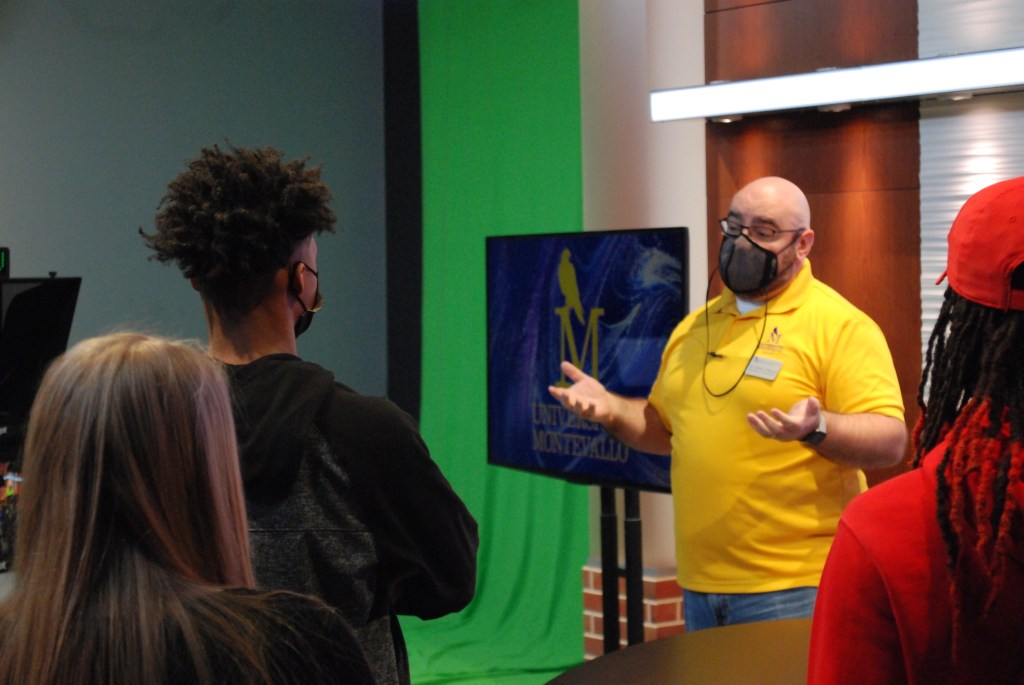
Finklea says it is important for the journalism side of production to learn how to “write for the ear,” and he places heavy emphasis on conversational writing.
“Writing for television is not the same as writing for print, because if I’m writing something for print or digital, I know that the audience can reread a sentence. So, they’ve gotta be able to hear it that one time and comprehend what we’re saying,” said Finklea.
Though the VVN brand is part of the mass communication curriculum, students who are non-majors can also get involved.
Finklea says many students want to watch the production to see more of the broadcast side. Because he values news transparency, Finklea will tell those students to pull up a chair.
“The door’s always open if somebody wants to come and see how we do it. When you think about as a culture the general attitude toward news media and just how distrustful so many people are, I think it’s important being open and transparent about our process,” Finklea said.
Finklea says there have been many students who were part of VVN graduate to become video editors, photographers, digital content producers or production assistants within the Birmingham area and beyond.
He also says many alumni will help current students through networking opportunities.
“I think for me seeing the students, even if they don’t go into news, seeing them go out there, find a job that they are passionate about…that makes all of it worth it for me,” said Finklea.
In the fall 2022 semester, Finklea says VVN will be expanding their production schedule from one show a week to two shows a week. More students will be able to join the VVN crew for their production experience.
To learn more about this opportunity, email Dr. Bruce Finklea.
The Alabamian
Harrison Neville is a senior English major who has been part of The Alabamian since his first semester in fall 2018. He says his experience gave him an idea of how he wanted the newspaper to look like when he applied for the editor-in-chief position.
He was given the position last fall 2021 semester and says The Alabamian is a truly special experience.
“We have opportunities for literally any major you can think of and will look good on anyone’s resume. So, I would just encourage any students who are looking for a way to improve their resume, gain some new skills or just want to get involved to come check us out. We’re a lot of fun,” said Neville.
The Alabamian meets every Monday at 5 p.m. on the second floor of Farmer Hall in the Farmer meeting room. Neville says anyone who is looking to join can stop by during a meeting or email him anytime.
Students are able to freelance and work remotely if classes interfere with meeting times.
For students in the mass communication department, Neville says there are many skills a student can develop, whether it be broadcast production or multimedia journalism.
“I know that mass communication focuses on teaching various aspects of journalism beyond just writing, including things like podcasts, broadcast, all that fun stuff. We can always use more assistance with podcasts. More people involved is always great. Our podcast producer is always looking for more people who have that skill set,” said Neville.
Students can also help out with design layout, photography or creating graphics. The following positions are open for students wanting to join The Alabamian:
- Assistant layout manager
- Copy editor (paid position)
- Beat reporter positions
- Graphic designer (paid position)
Neville says The Alabamian puts more time into developing skilled writers. He says the editors not only point out what article needs to be improved, but also why the article needs to be improved.
“This isn’t really a normal practice for every newspaper, but we’re a student publication. Beyond just providing the news for the campus community, one of our big goals is to help students improve their own writing,” said Neville.
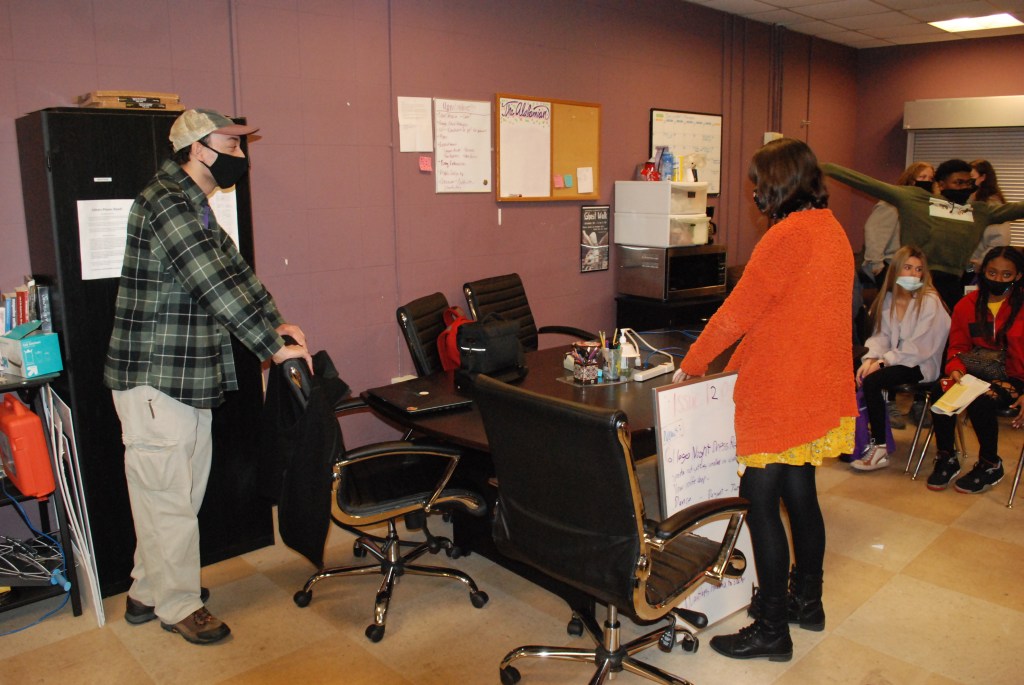
It takes two weeks to put together a newspaper. Writers are given a week to complete their articles, then the editing staff will work with the writers to edit and revise the next week. On the design side, the layout manager will organize the newspaper visuals using content from photographers and graphic designers.
The managing editors of content and production and the editor-in-chief will decide what visuals and articles will be put in the newspaper.
“There’s a lot more that goes into running a newspaper beyond just writing the story. That’s the type of experience you can get here that you might not get elsewhere,” said Neville.
To find more information about The Alabamian and its open positions, go to UM’s falconlink page.
BEA Club
The Broadcast Education Association is an international professional association that has many student chapters in colleges throughout the U.S. It is a chance for students to get broadcast experience and have their work featured in a conference the BEA organization hosts in April.
“The association’s publications, annual convention, web-based programs, and regional district activities provide opportunities for juried production competition and presentation of current scholarly research related to aspects of the electronic media,” stated the BEA website‘s About Us page.
The BEA Festival of Media Arts accepts submissions from around the world, and the guidelines can be found on their website. The BEA conference is held annually in Las Vegas to present awards to winning students.
At UM, club president Victoria Wright is a senior mass communication major who organizes the club meetings through communications and social media promotion with the help of vice president Taylor Walker.
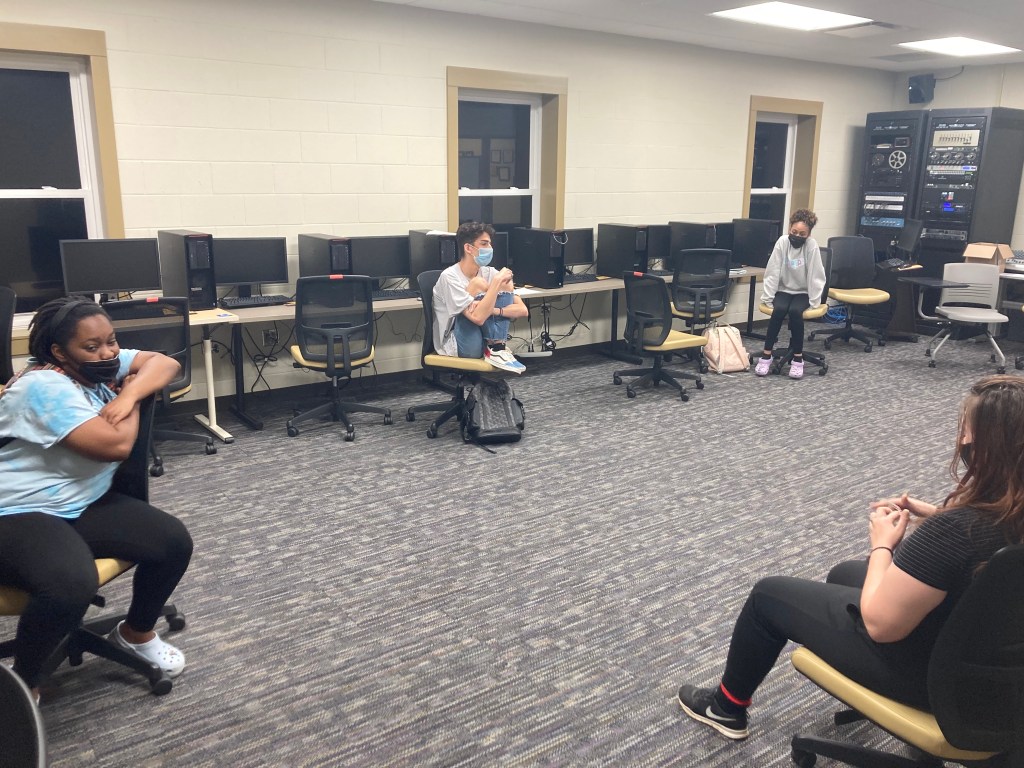
“I got involved because of my advisor, Dr. Deavours. She kinda asked me because I was coming into my senior year to do this with her and to help some of the students in the [mass communication] program,” said Wright.
Drs. Danielle Deavours and Stephanie Dean serve as advisors to help promote BEA Club. Other club positions include treasurer, who helps budget club spending to prepare for the BEA conference in April. The secretary will keep up with meeting agendas and serve as a liaison to other clubs on campus.
Wright says a student can get just about every skill when joining the BEA Club, such as camera work, writing and production. Working with others in a group is another skill students can develop on a professional level.
The pre-production crew is how multimedia journalism students can get involved to contribute their writing skills.
“You can definitely be part of pre-production mostly in BEA Club, because that’s where all the writing and narrative parts take place, interviewing and stuff like that,” said Wright.
Wright says her position as BEA president has helped her with leadership skills, which have translated over into her professional development and her internship with Kiwanis Club of Birmingham.
“You learn alongside other people but you also learn from their skills. You can improve upon your skills with theirs,” said Wright.
Wright was accepted to present at the 2022 BEA Research Symposium for her research that explores race swapping in book adaptations for TV. Deavours assisted in the undergraduate project, and Wright will be presenting at the BEA conference in April.
Wright says any student wanting to get involved in the BEA Club can contact her through her email or visit the Falconlink page.
Interships
Dr. Danielle Deavours is the internship coordinator for UM’s mass communication program.

Internships are programs set up with a student and a professional organization to allow that student work experience. Deavours says internships in mass communication may be different than in other fields.
“What we are looking for in organizational partners from the professional media side is people who want workers who want people to do hands-on tasks that will help them grow in their skills and their experience,” said Deavours.
She says the first step of applying for internships starts with students thinking about what they want an internship to do for them.
Students should ask themselves the following questions:
- What field do you want to go into?
- What work structure works best for you?
- Do you care about the name brand of the company you would work with?
- Would a smaller organization allow you more work opportunity?
Deavours says going to an advisor or speaking with the internship coordinator is important when discussing the needs and desires of any student seeking an internship.
“The more information we have from you, the better the fit will be on the back end for an internship. What we do from there varies widely, depending upon what’s available, who’s looking and what field you’re going into,” said Deavours.
From there, the internship coordinator and student will work together to come up with a list of potential internship locations. The student will then need to work on a resume, cover letter and references if needed.
The decision to apply with the completed materials will then be up to the student.
The qualifications for mass communication student internships are to be junior or senior with a GPA of 2.5 or above. A student must have 60 credit hours completed and 15 credit hours of mass communication classes.
Deavours says she advises students to begin internship conversations with their advisors during freshman year. Time can sneak up on a student during their sophomore-to-junior or junior-to-senior year transition.
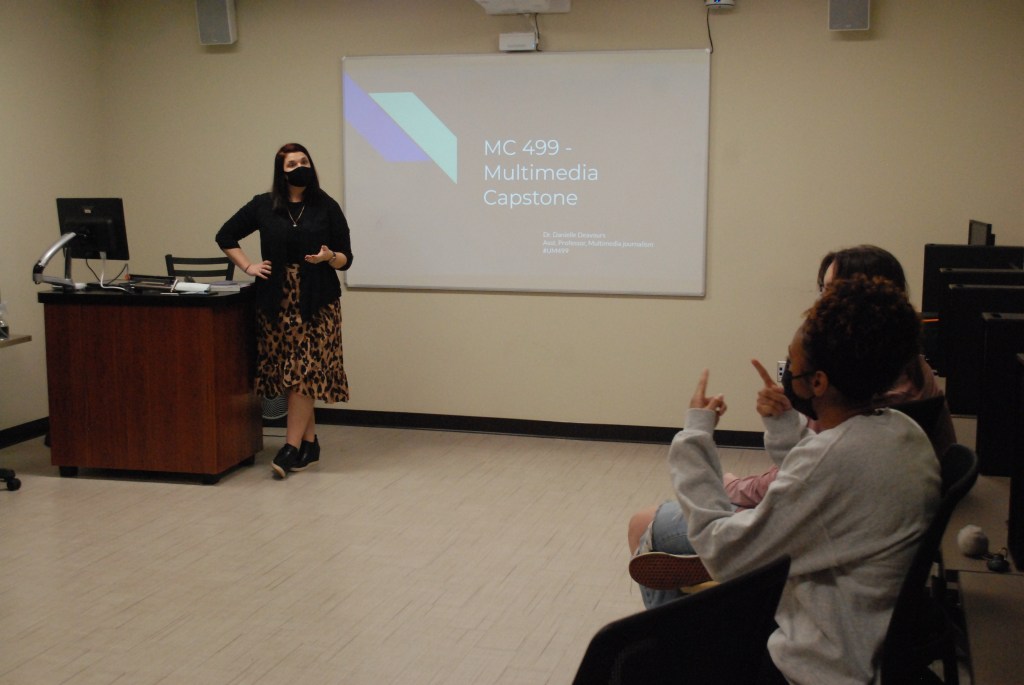
“I think a lot of students just don’t know where to start looking. Just because we limit internships to your junior and senior year doesn’t mean that you shouldn’t be getting professional work experience through things like Vallo Vision News, The Alabamian and other clubs prior to that in your freshmen and sophomore years,” said Deavours.
Many students express concern about not being qualified enough for internships in their field. Deavours says she thinks a lack of confidence in their abilities is what holds students back from applying.
She says what students need is a willingness to learn and drive to show up and perform to the best of their ability.
“I think a lot of students have the misconception that they need to be at a professional level to even apply for an internship. That’s a big misconception because anyone taking on interns knows that you are a student, knows that you are still learning and is dedicating themselves to invest in you as a learner and someone wanting to grow,” said Deavours.
Deavours gave an example of a UM student who had success after applying for an internship. In the internship process, Deavours said mass communication senior Victoria Wright did not feel qualified enough.
Deavours says Wright has many talents in many different areas, so they talked about an internship as a way for her to explore an industry prior to applying for a real job position. She was able to connect Wright to a nonprofit organization called Kiwanis Club of Birmingham for a short-term internship.
“Victoria being Victoria, and being a wonderful mass communication student, came in willing to work, willing to do whatever, and wanting to grow and learn. And within just a few weeks, very simple tasks were turning into more and more responsibility,” said Deavours.
Deavours says as the company gave Wright more duties, she was essentially working as a communications director through her internship.
“That’s an invaluable experience that now has set Victoria on her career path and allowed her to already have networking and job offers from local businesses across the Birmingham area,” Deavours said.
She says Wright’s internship experience showed her the path that she will follow for the rest of her life.
To learn more about the mass communication program, visit the program’s website.
 Vallo Vision News