
By: Drew Roberts
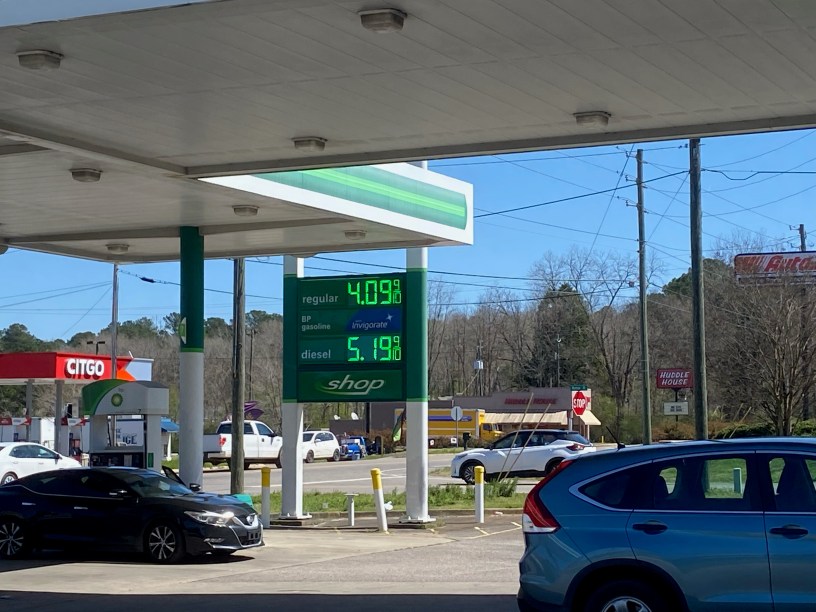
For many Americans, a road trip isn’t as simple as packing a bag and hopping in the car. There’s now a substantial price tag attached to every mile driven. Last week, Montevallo student Kendall England took a 500 mile round trip to Orange Beach, Ala. Looking back on the trip, he thought of how expensive it had been, rather than any sunny beaches. Usually it only costs $30 to fill up his tank, but now it costs around $55.
“I have to budget more with my weekly expenses,” he said. “I’m not able to spend as much because of gas prices being so high.”

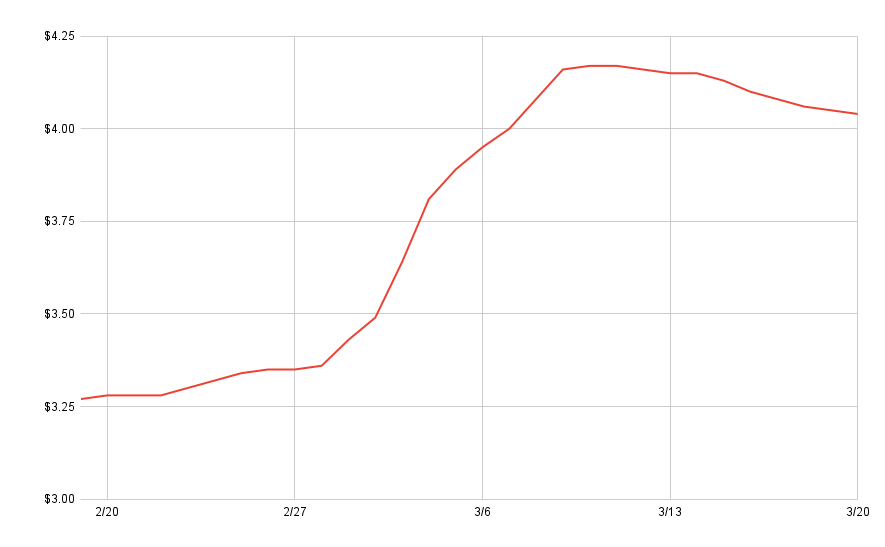
England’s predicament is happening all across America. Gas prices nationwide have steadily risen since the beginning of March. Alabama, for instance, averaged $3.27 per gallon throughout February. Now, you’d be lucky to find anything under $4.00.
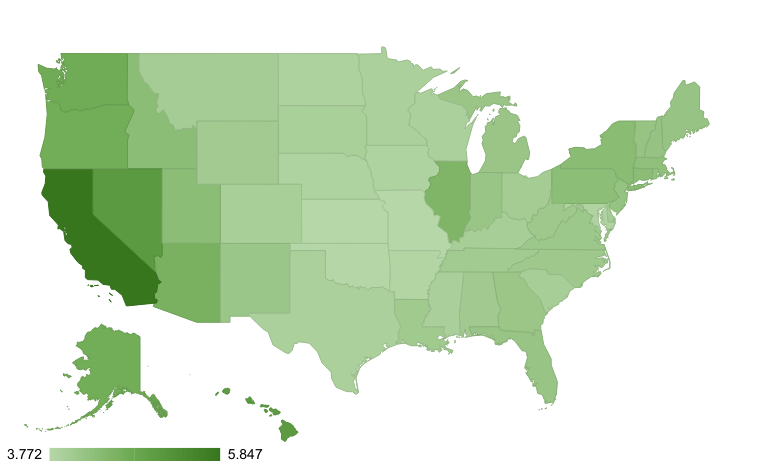
The spike in prices has mainly affected states with high populations and states on the West Coast. California leads the nation in gas prices at $5.87 per gallon. Nevada, another western state, follows closely behind at $5.10 per gallon. New York and Pennsylvania are two eastern states that have been hit hard as well, their prices $4.37 and $4.33 respectively.
Economic Background
The primary cause of this price increase is the Russian invasion of Ukraine. Dr. Brian Motii, an economics professor at the University of Montevallo, emphasized the importance of Russia in the world economy.
“Russia is one of the top three oil suppliers in the world,” he said. “It supplies at least 20% of the world’s oil consumption. Although the U.S. imports a much smaller percentage of oil from Russia, its economy is not immune from a world oil supply shock. This will cause a leftward shift of the world supply of goods and services. That means the U.S. GDP as well as world output will be negatively impacted as the crises contine, and it may even lead to a strong recession with high inflation.”
Motii doesn’t anticipate prices to lower any time soon, but maintains that the future is uncertain.
“Prices are generally said to be sticky downward,” he said. “It means we should not expect a quick decrease in oil and gas prices. However, it all depends on the continuation of the Ukraine crisis, supply chain impacts, and Covid-related issues.”
That last part is notable. The COVID-19 pandemic continues to cast a shadow over the world. Motii cited overspending on stimulus checks as another contributor to the spike in gas prices.
“Stimulus checks have increased spending and therefore inflationary pressure on prices,” he said. “They have significantly raised the deficit spending and is likely to result in unwanted tax hikes and price increases in the future. Decrease in work efforts, lowering productivity, and increase in spending, are just a few others to name.”
Historical Background
Dr. Scott Turner, a political science professor at the University of Montevallo, detailed the origins of the Russia-Ukraine conflict. Ukraine was a part of the Soviet Union for decades. When the Soviet Union collapsed, the Ukrainian parliament voted for independence, leading other Soviet republics to do the same. Turner emphasized the importance of the time right after the Soviet Union’s collapse. He observed that the roots of present-day Russia can be traced back to this period.
“There was definitely a hopeful period in the 1990s, but simultaneously the economy was devastated after decades of mismanagement under state control,” he said. “They tried to move extremely rapidly toward a market economy…By the end of the decade, the Russian people were ripe for a strong man like Vladimir Putin to step in and promise to save the country.”
In 2014, Russia took control of the territory of Crimea. This led to a Russian insurgency in Eastern Ukraine that has not yet ended. With hopes of installing a puppet government in Ukraine, Russia invaded the neighboring country in late February. Turner believes that Putin’s actions are unprecedented in the politics of today.
“The age of aggressive empire-building is something that we thought was relegated to the 19th Century,” he said. “This is really flouting the norms of international law that have been built up since World War II.”
Turner predicted that Russia will gain control of Kiev within the next few weeks, causing plenty of bloodshed. The war would then change to a Ukrainian insurgency against a Russian puppet government. He lamented that it would take years for the fighting to end.
“I am a guy who likes to be optimistic, but there’s not a lot of optimism to have right now,” he said.
Turner’s lack of optimism stems from the man at the center of this conflict: Vladimir Putin.
“I don’t think there’s going to be a better relationship with the United States and Russia as long as Vladimir Putin remains in power…if we were to somehow see a radical internal change in Russia, the future would look a lot brighter.”
 Vallo Vision News