
By Victoria Wright
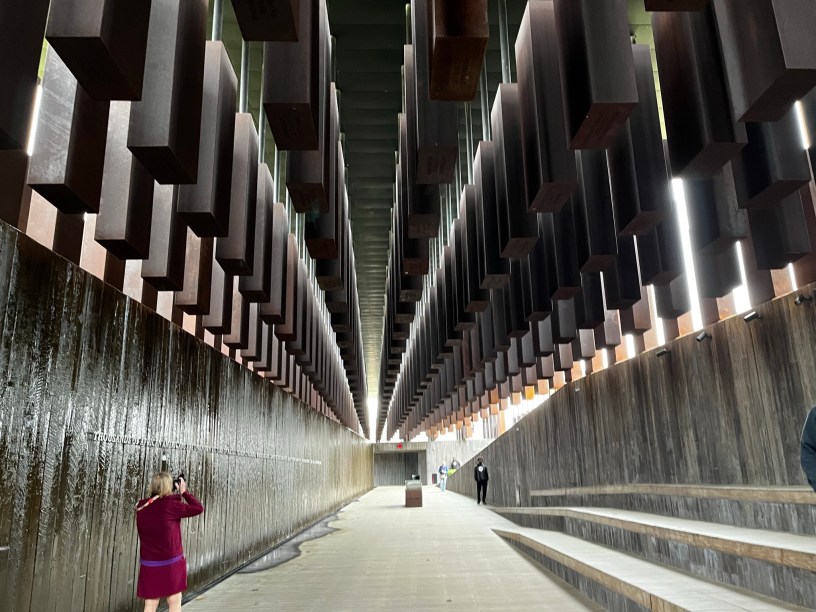
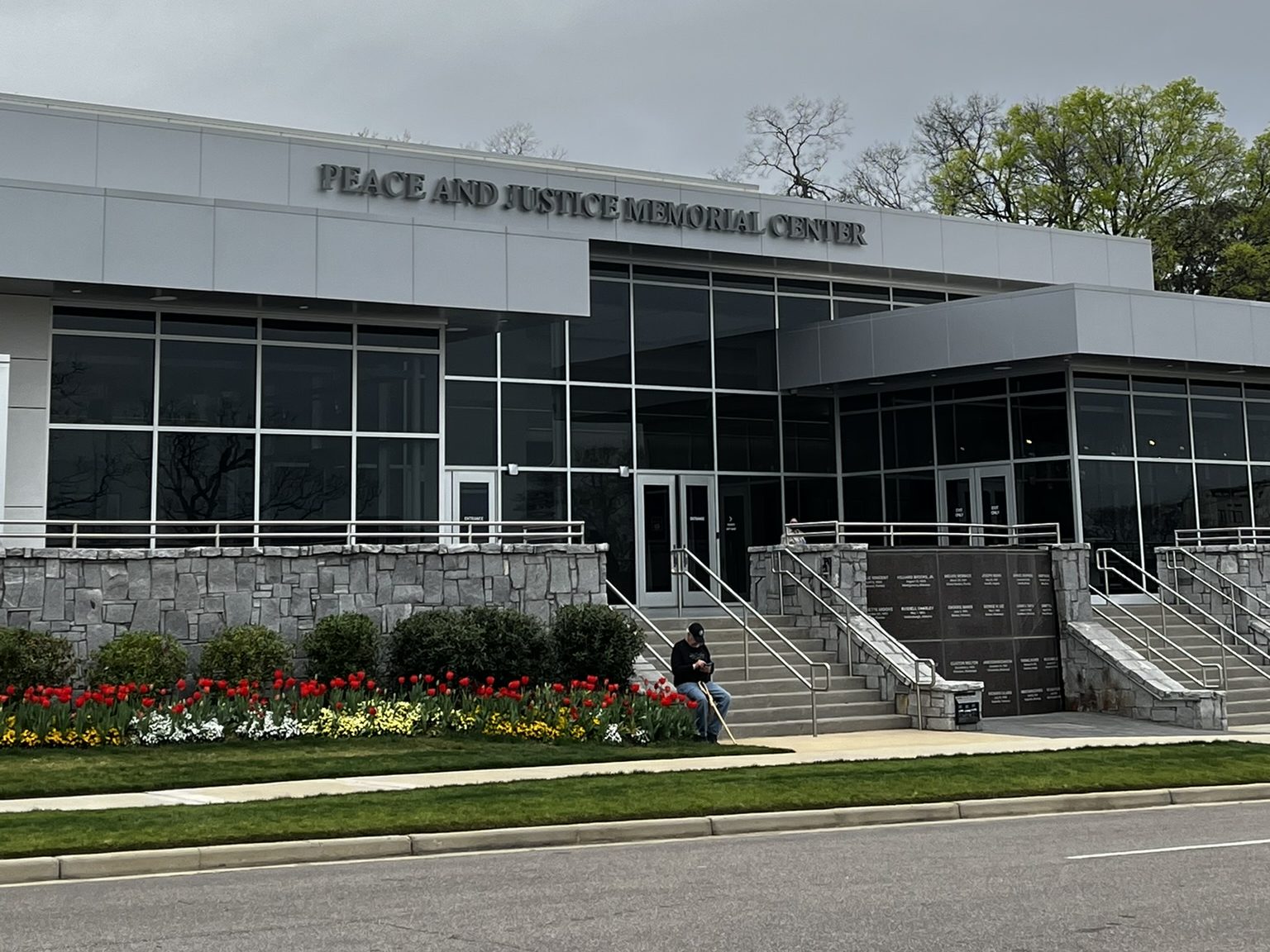
This past month, a UM Communications Studies class, Social Movement Rhetoric, visited both the Legacy Museum: From Enslavement to Mass Incarceration and The National Memorial for Peace and Justice.
The idea came about during a discussion about one of the readings from the Civil Rights movement, according to the students in the Coms class.
The Legacy Museum and the National Memorial were created by the Equal Justice Initiative, a non-profit organization founded in 1989 by Bryan Stevenson, in 2018.
According to the EJI website, the museum provides a history of the United States with a focus on the legacy of slavery. The memorial is the first of its kind, dedicated to the legacy of enslaved Black people and people terrorized by lynching.
Destiny Edwards, a UM student in the social movement class, discusses how these locations were great opportunities.
“We were already reading about the civil rights movement in class, but there’s only so much you can learn from reading. Like seeing it and being in that space is a different understanding.”
So on Friday, Mar. 11th, students piled together in cars and headed to Montgomery.
Upon arriving, students were informed that flash photography is not allowed inside the Legacy Museum.
“It makes visitors really absorb the material,” said Edwards.
The museum itself houses a rich amount of history from a variety of periods in American history.
Like 200 sculptures from the Transatlantic Slave Trade, the economics of enslavement, 300 jars of soil collected from lynchings around the country, and much more according to EJI.
Despite this museum being based in Alabama, many people in the group had never visited the location. Dr. Sally Hardig, UM Communications Studies professor, visited both locations for the first time in April.
Hardig was stunned upon entry.
“I was impressed by the artwork; it was extremely impactful and moving.”
At the end of the Legacy Museum, visitors are given a chance to reflect on their visit in the Reflection Space, where honor is given to hundreds of people who worked throughout their lives to challenge racial injustice, wrote the EJI.
After her walk through the museum, Hardig expresses the feeling of being better educated.
“I was emotionally wiped out, but I was also humbled by all of the faces of the people who fought for the movement.”
There were many faces on the reflection wall she didn’t recognize, and as a professor, Hardig believes it’s a shame and she’s working to change that.
However, Edwards took a different approach and feeling in her reflection time.
“As a Black woman, it’s both draining and angering sometimes to see how my community has suffered, but still gives me a chance to learn more about things I wasn’t aware of.”
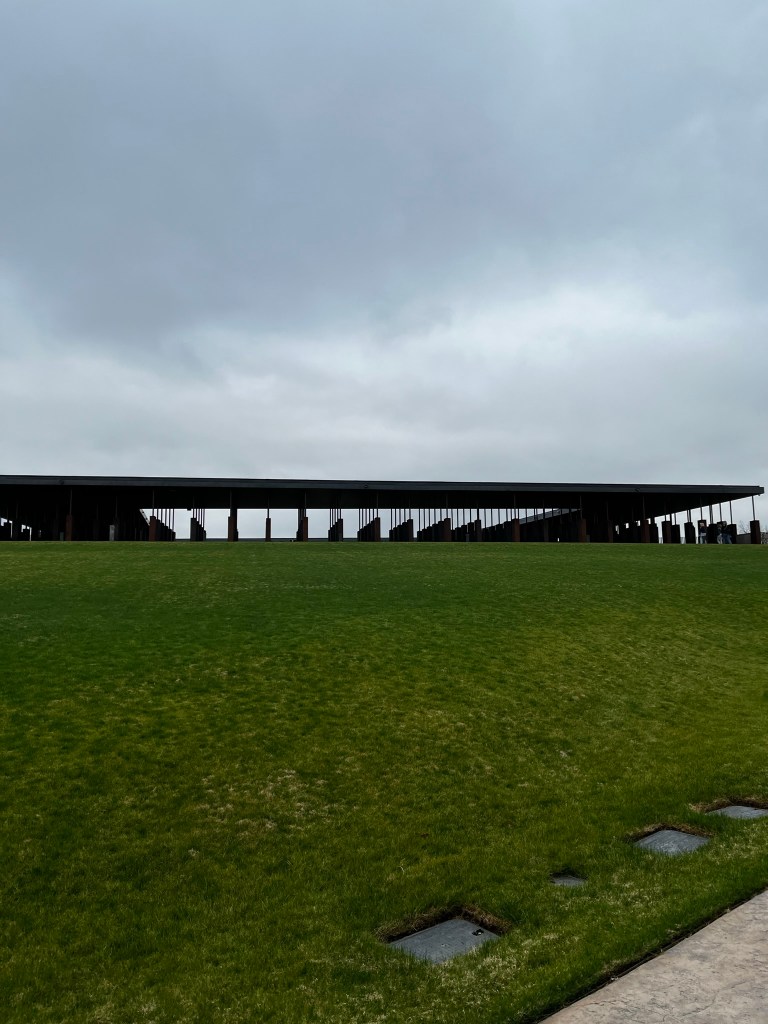
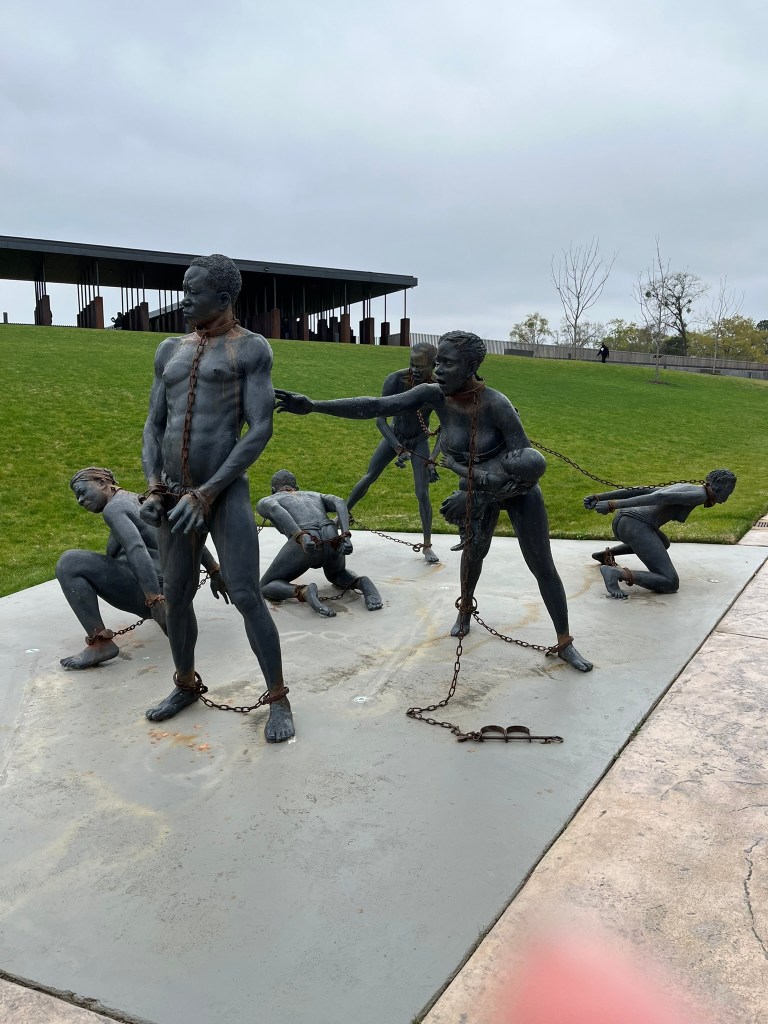
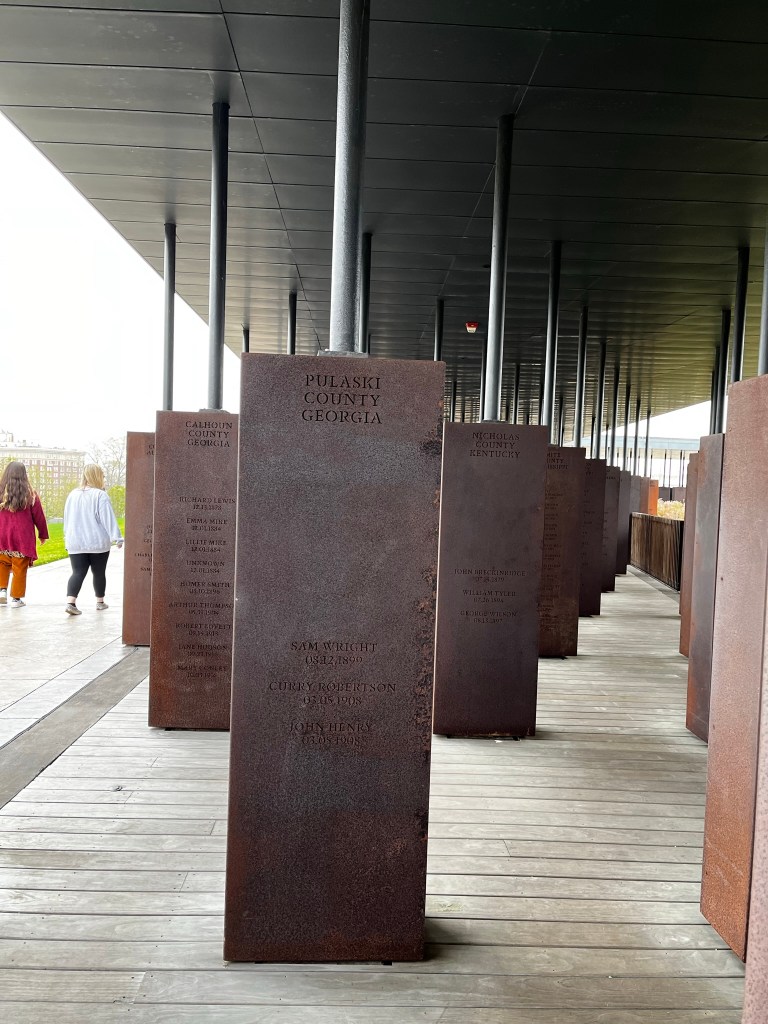
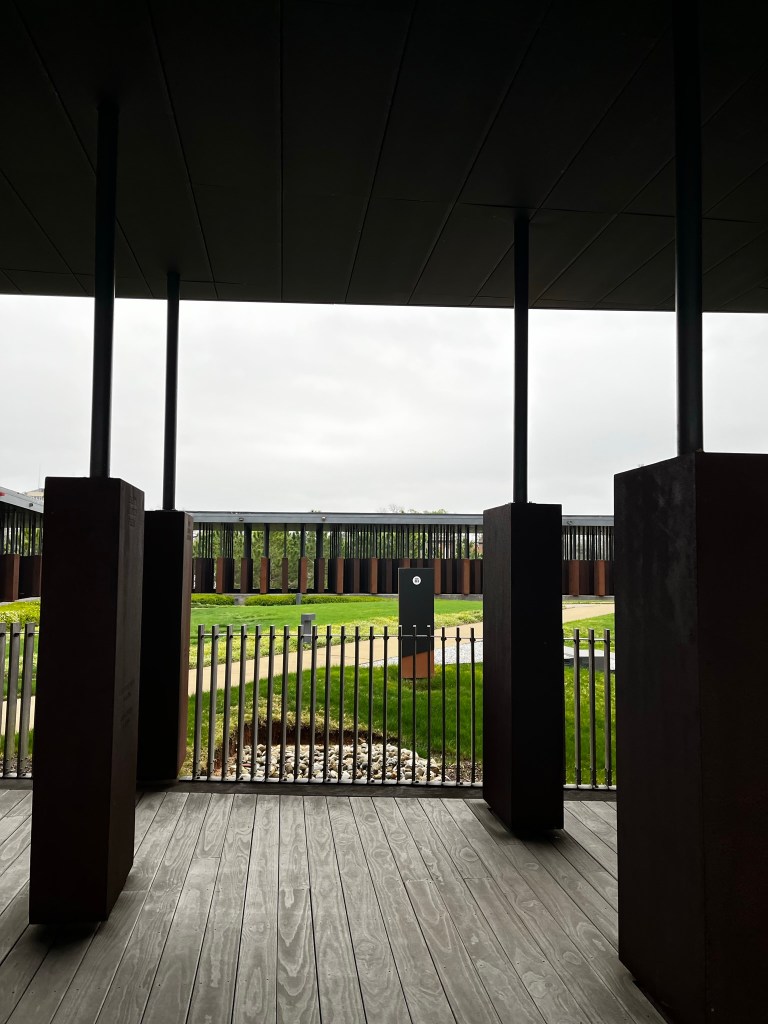
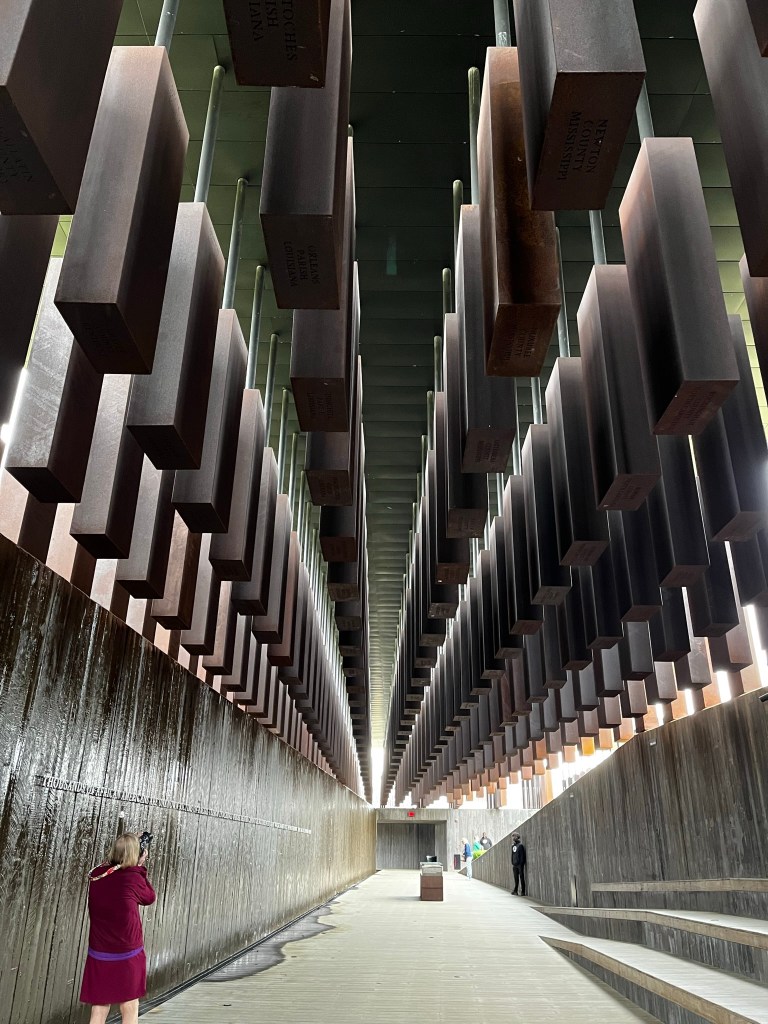
Though the National Memorial for Peace and Justice is the first of its kind, it hopes to give a sober, meaningful environment where people can gather and reflect on America’s history of racial inequality.
Speaking to the importance of these types of environments, “We need to hear all voices and to be moved to discomfort so that we can avoid repeating history,” Hardig said. “People need to see how ugly humans can be to each other.”
Seeing the ugly isn’t the only thing people should be doing, according to Hardig.
“We need to do everything in our power to make sure that we use our voices to speak against injustice when we see it.”
After the field trip, many of the people in the group felt moved to do something more or were unsure what to do with the information they obtained, according to Edwards.
“It’s kinda this now what moment. You learn about all these injustices, and you think what can we do to stop this from happening?”
The information and experience have inspired Hardig to act.
“I’ve been teaching 20 years, and the trip was one of my highlights,” she said. “I was inspired to shift mid-semester to an entirely new way of framing my class and teaching so that the assignments better reflected the experiences and needs of the students.”
Students or faculty interested in learning more about the Equal Justice Initiative, or the Legacy Museum: From Enslavement to Mass Incarceration can visit the organization’s website.

