
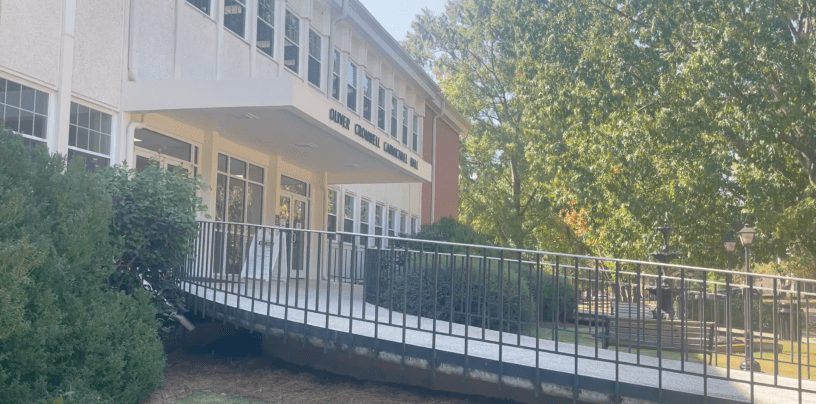
Carmichael Library’s newest collection display closed on October 15.
The most recent installment was a nod to Hispanic Heritage Month which is held from September 15 to October 15. The library took inspiration from several sources and other libraries to create a display to highlight Hispanic authors.
The collection was displayed on the first floor of the library and featured videos, online resources, fiction and children’s books.
“We’re hoping to bring awareness to these authors but also all the different resources we have available,” said Sheila Brandt.
Brandt is the systems and digital services librarian for Carmichael Library. She goes on to explain that the library has an extensive collection of resources and some lesser-used assets may get lost in the mix. The special collections program gives the library a chance to feature these. The library uses a variety of resources to curate the collections.
“I look to see what other libraries are doing as well as any resources there are out there about the heritage month,” she said.
This month’s display featured a variety of children’s books as well as films about Hispanic Heritage. These included films like “Caesar Chavez” which IMDb describes as “A biography of the civil-rights activist and labor organizer Cesar Chavez.” As well as several children’s books including “My Two Boarder Towns” by David Bowles. Bowles’ book describes a boy’s life living on the U.S.-Mexico border. The book has won several awards, including being named one of the 2021 School Library Journal Best Books.
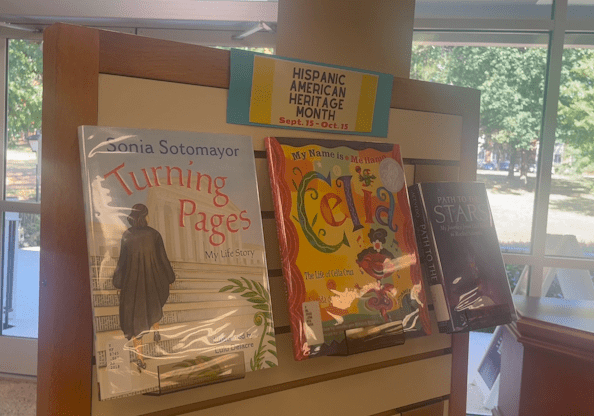
While the collection officially closed on October 15, it is still available to see on the library’s website.
In September, the library ran a similar display for “Banned Books Week.” According to their website, “The ALA’s Office for Intellectual Freedom (OIF) tracks attempts to ban or restrict access to books across the United States and to inform the public about censorship efforts in our libraries and schools.”
The library’s collection offered some of the banned books as well as news articles and educational videos about the state of banned books.
“We really tried to tie in our children’s collection which has quite a few banned books,” said Brandt. The ALA found that there were over 700 challenges to materials taught in classrooms this year. The association has a list of commonly challenged children’s books on its website.
The collection closed last month but is still on the library’s website.
Currently, the library tries to rotate its collections once a month. Next month’s will feature books for another heritage month.
“We usually try to follow the observations for that month, so in November we’ll do Native American Indian Heritage Month,” Brandt said.
The library also puts out a newsletter where information on upcoming events and collections can be found. The Native American collection will open sometime in November and will feature a similar set-up to the one in October.
 Vallo Vision News