
Story by: Laura Moxim

MONTEVALLO, Ala. – Tabitha Crowder, or “Tabby” as her friends and family call her, grew up in a small town in Vincent, Alabama, and always had a love for animals.
When she received a diagnoses of depression in January 2021, shortly after her beloved uncle passed away, she knew she needed to make a change. In her eyes, life was not about putting puzzles together and reciting her ABC’s anymore. This was, as she called it, “adult-ing.”
Home Away From Home
Upon touring the University of Montevallo, Tabitha had high hopes for her upcoming freshman year. Aspiring to be a therapist herself, Tabitha is a psychology major here at UM and wants to work with young adults.
However, Tabitha realized that adjusting to campus life and being on her own for the first time was harder than she anticipated.
“We all find different ways to manage the stress college can bring. I had a hard time after my uncle passed, and classes were a challenge to go to.”
Tabitha Crowder
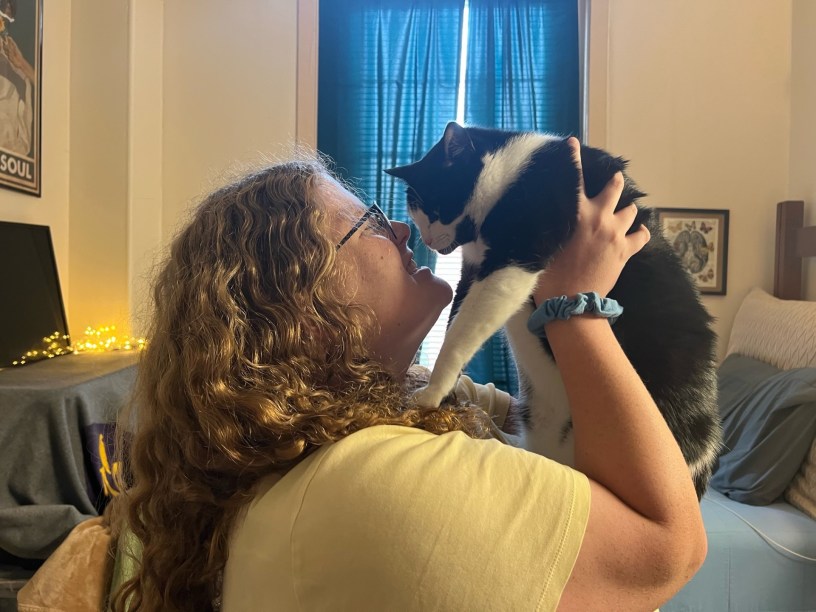
Soon after starting her freshman year, Tabitha’s therapist of two years had recommended she look into an Emotional Support Animal (ESA) to make her time here at UM more comfortable. After “mountains” of paperwork, a deep breath, and a trip to the shelter, her new best friend, Addie, was in her arms and welcomed to her new home in the dorm.

According to Tabitha, in order to get an ESA, the resident needs to go through Disability Student Services (DSS), and receive paperwork that a current therapist of at least three months needs to fill out before getting your animal. That was not an easy transition to make however.
When depression peaked in Tabitha’s life, turning to Addie was the one thing that kept her on track. “Addie has always encouraged me to wake up and get my day started” Tabitha said. “I never expected a cat to bring this much happiness out of me.”
Although Addie and Tabitha’s bond was irreplaceable, having an ESA was not all that it was made out to be, she said.
“In the paperwork when you get your ESA, it states that your RA will tell you at least a day before a fire drill is going to happen to help you prepare your animal and yourself.”
Tabitha Crowder
Tabitha stated she has never been warned about a drill from any RA (Residential Assistant) however, and is always difficult getting her cat, Addie in her crate with the loud alarm blaring in her ears.
“I believe this is an issue with communication” She said. “Not only do people with an ESA struggle mentally like I do, but the last thing they need to worry about is another stressful event on their hands while trying to care for their animal.”
“Addie has since gotten used to the fire alarm, but still needs reassurance from her owner that things will be alright after coming back inside,” Tabitha said.
Preparing for the next steps
Tabitha is now a senior and has had Addie for three years. Managing her work and school life has been easier since adopting her ESA and looks forward to her future ahead. She is planning to go to grad school to get her master’s degree in counseling to help others in the way that she felt she was helped when at her lowest.
With Addie by her side every step of the way, Tabitha is excited to start her career and knows that even when days start feeling gloomy, Addie will be there to raise her spirits.
“I know that coming home to Addie on the days I have difficult clients and a stressful workload will help me breathe and remind me that this is my dream and my passion.”
Tabitha Crowder
 Vallo Vision News