

Story By: Cypris Wilkinson
MONTEVALLO, Ala.– For many student-athletes, balancing academics and sports is already a challenge. But for Beth Balent, a swimmer and University of Montevallo senior, the pool became more than just a place to train, it became a laboratory.
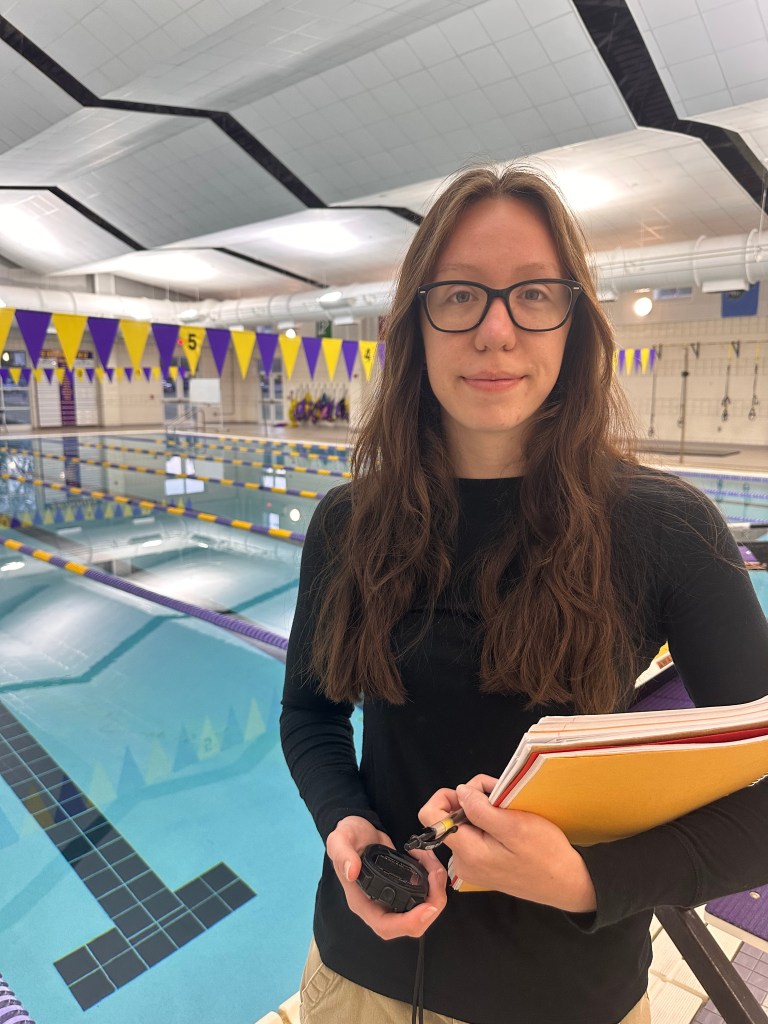
“I think undergraduate research is very important because it gives undergrads a way to branch out and put something that they want to test out there.”
Beth Balent
When she realized she only needed one class to graduate, she saw an opportunity to take on something more meaningful. With aspirations for physical therapy school, she decided to explore an area of research that remains largely uncharted: fitness testing for swimmers.
“I realized that there were a million and one things that I could do, and I ended up really wanting to do something with swimmers,” Balent said. “Because I’m a swimmer, and that was something that was important to me.”
Dr. Robert Herron, a professor at the University of Montevallo, had Balent as a student for a few years and worked with her in class and as a lab assistant. When she approached him about research, they discussed the competitive nature of physical therapy school and how an undergraduate research project could set her apart. The two brainstormed a study focusing on a major gap in sports science: assessing aerobic fitness in swimmers.
“I’m going to PT school, and one of the things I’m interested in is sports-specific protocol and how to test all athletes, not just in the lab but in real life,” she said. “I think it’s really important to be able to test swimmers, who are kind of a unique group because they’re in the pool, so they can’t do as much as people outside of the pool can. So I think that this research is important.”
The goal of Balent’s study was to determine whether the results of a pool-based fitness protocol would correlate with a widely accepted lab-based fitness test. She conducted a 500-yard swim test, then compared those results to a traditional running-based test conducted in a lab.
“Fitness equipment is normally on land,” Herron said. “We have rowers to do cardio, we have ellipticals, we have treadmills, we have bikes, we have skiing ergometers. We don’t have anything for swimming. There are a few protocols that people use to try to assess aerobic fitness in the pool, but nothing that’s widely accepted. And so she really wanted to take a swing at that, see if we could correlate a pool-based protocol to lab-based protocols.”
Balent said some of her data was inconclusive or required further testing due to certain research limitations, including the fact that subjects could not wear the VO2 Master Mask in the water like they could on the treadmill test.
However, she believes her study is an important step toward developing more sport-specific aerobic fitness assessments.
“She took a good first swing at it,” Herron said. “She’s got data to analyze. It looks like she has some feedback on what we might need to do differently in the future, but that’s the scientific process. You have a hypothesis, you test it, you get your results, you move forward and build that brick in the wall of additional research and knowledge. So people can build off of that.”
Balent’s research contributes to the broader conversation in sports science by highlighting the need for standardized fitness testing across various sports, not just swimming. Many traditional aerobic capacity tests are designed for runners or cyclists, which may not accurately reflect the physical demands of other sports.

“In exercise or in coaching, you assign exercise intensity as it relates to your maximum efforts,” Herron said. “I think that Beth has taken a good first step in looking at a performance protocol.”
As researchers continue refining protocols, Balent’s study lays the groundwork for future advancements in sport-specific fitness testing.
“I think the next step in this is potentially having additional protocol,” Herron said. “That lets people add on to the ecological validity; how to use this in real life for coaches, athletes, help improve safety, help improve performance. And so we’re excited about this being the very beginning of trying new protocols.”
For Balent, the experience was about more than just research, it was about applying years of education to real-world challenges.
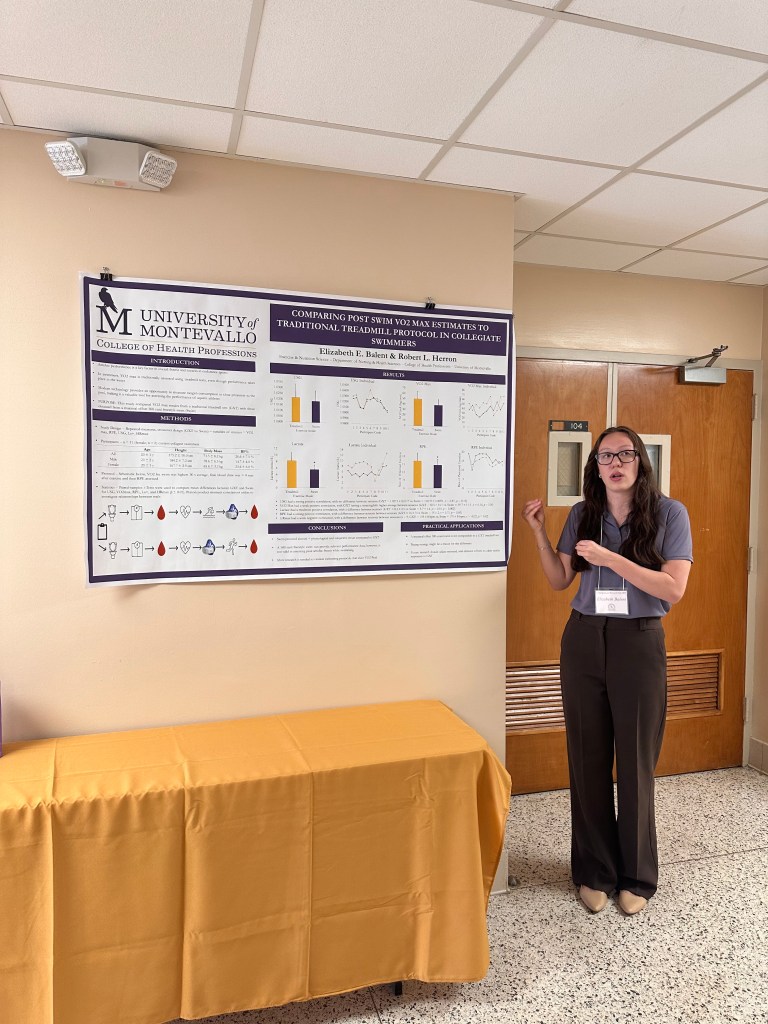
“I think undergraduate research is very important because it gives undergrads a way to branch out and put something that they want to test out there,” Balent said.
Herron hopes more students take advantage of undergraduate research opportunities.
“I would encourage all undergraduate students to get involved in research. It really allows you to apply that stuff you’re learning in a book to real life,” Herron said. “And that’s really hard to do outside of college. So getting that work environment kind of preparation is really, really important. And you never know what doors it might open up for you in the future.”
To learn more on how to get involved with undergraduate research, check out the University of Montevallo website.
To hear Balent explain her undergraduate research at Undergraduate Research Day, watch the video below:
 Vallo Vision News