

By: Elise Kidd
PELHAM, Ala. — Tucked away inside Oak Mountain State Park is a place where avian wildlife can recover from injuries, educate the state and discover a way to still spread their wings after life changing events.
The Alabama Wildlife Center serves as an educational facility and avian clinic. Inside the center is a self-guided tour that includes information about migration patterns, different types of feathers and eggs, and additional information about birds in Alabama. However, the educational aspect doesn’t stop at the tour. There are points inside and out where visitors can take a look at some of the birds currently calling the center home.
The AWC is one of only three facilities in the state that is permitted to care for federally-protected and migratory bird species. These species include crows, hawks, owls and more. (A full list can be found on the center’s website.)
Their clinic takes in over 600 baby birds during the season and an average of 2,000 birds annually, with a goal of always finding a way to release them back into the wild. Many of the injured birds are brought in by everyday citizens looking to save birds they’ve discovered.
“Birds are very difficult to work with,” said AWC Education Director Viktoria Partain, who is also a UM alum. “They are a very fragile animal, and they would just [treat them] incorrectly. So, this provides people the opportunity to help.”
While the hope is to always release the birds back to their natural habitats, sometimes circumstances don’t allow that. Birds may have experienced life-altering injuries or conditions which result in an inability to survive in the wild. The AWC makes sure these birds still have a suitable home at the center, and many go on to become what the center calls “education ambassadors.”
These ambassadors sometimes travel along with Partain to schools around the state to showcase raptors and educate the people they visit. Other times, programs come to the center, or everyday guests can interact with some of the ambassadors, like Atlas and Shelby.

Atlas is AWC’s Eurasian eagle-owl. He was taken from a man in Wyoming who had bought Atlas through an exotic pet trader. Atlas was born among humans and ultimately imprinted on them at a very young age, making him fearful of other owls. This leaves him unable to survive in the wild. So, he instead enjoys time with caretakers at the AWC.
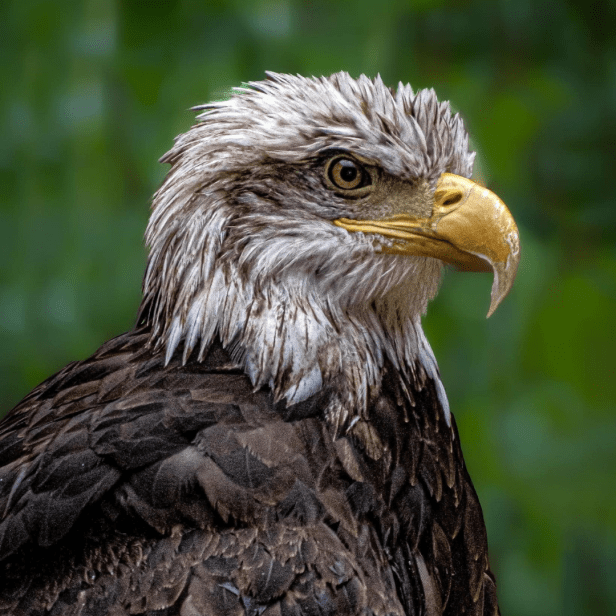
Shelby, the AWC’s resident bald eagle, was hit by a car in Washington state, leaving her blind in one eye, which could have resulted in her death in the wild. Shelby was named for Shelby County, where the AWC is located.
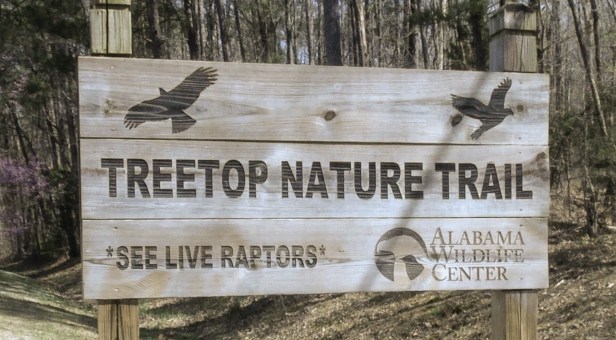
In addition to Atlas and Shelby, there are eight other ambassadors, with a ninth joining soon, a crow affectionately named “Jack Black.” Besides the currently active ambassadors, there are more to be found among the Treetop Nature Trail.
The trail has a boardwalk which leads through the forest of Oak Mountain State Park and features enclosures that hold some of the now-retired ambassadors. There are about six enclosures, each with plaques that tell a bit about the birds within.
Walking through the center or along the trail isn’t the only way to get some close-up time with the birds. The AWC accepts volunteers throughout the year. The non-profit organization only has seven staff members, and Partain stressed that volunteers are especially crucial due to the influx of birds that the center sees during migration season.
“During baby bird season, when we get those 600 plus baby birds that have to be fed every 30 minutes, we definitely rely on volunteers,” she said. “They’re the reason that we can keep going.”
If you would like to volunteer or visit the AWC, more information can be found at https://alabamawildlifecenter.org/
 Vallo Vision News