

Story By: Lillian Hall
JEMISON, Ala. — Long before Jason Powell became one of Alabama’s most recognizable horticultural educators, he was a boy trailing behind his father on summer trips across the state.
His dad, a fruit specialist with the Alabama Cooperative Extension Service, spent his days sharing research-based guidance with growers, and Powell saw firsthand what gardeners needed and how powerful education could be.
“I grew up traveling during the summer with my dad, and I saw how important that information was to the people receiving it,” Powell said. The rhythm of those trips and the steady conversations with growers helped establish the foundation of what would eventually become his life’s work.
A career path begins to grow
Powell’s path into horticulture began with a high school job that helped him understand what kind of life he wanted. That clarity led him toward studying horticulture in college and eventually toward a career built on connection, teaching and preservation.
“I think I decided as a high school student working at a local nursery that I really liked two things: plants and people,” he said. “And that helped me figure out I needed to look for a career that could include both.”

During graduate school, Powell found another source of inspiration that pushed him toward opening a nursery of his own.
“I think I decided as a high school student working at a local nursery that I really liked two things: Plants and people. And that helped me figure out I needed to look for a career that could include both.”
-Jason Powell, Owner of ‘Petals from the Past’
While visiting the Antique Rose Emporium in Texas, he noticed how the gardens served as living classrooms. The arrangement allowed visitors to learn by walking through curated beds and observing how different varieties performed in the landscape. The experience stayed with him.
When Powell and his wife, Shelley, opened Petals from the Past in 1994 in Jemison, education became the center of their mission. They wanted to build a nursery where learning happens naturally as people explored the grounds.
“That vision has been our focus for 31 years,” Powell said. Instead of focusing solely on retail rows of plants, they created display gardens that show customers how mature shrubs, trees and perennials behave in real-life conditions.
Preserving living history
Today, Petals from the Past is known across the South for its preservation of heirloom and old-garden plants, such as antique roses, heritage fruit trees, and longtime Southern perennials. These varieties have endured for decades or even centuries and often offer resilience and character that newer introductions lack.
Powell sees value in protecting these plants because they hold both horticultural merit and cultural history. “These varieties have endured for decades, sometimes centuries, and they carry a resilience and character that newer plants just don’t have,” Powell said. “They’re worth protecting because they hold real horticultural value, but they also carry pieces of our cultural history.”
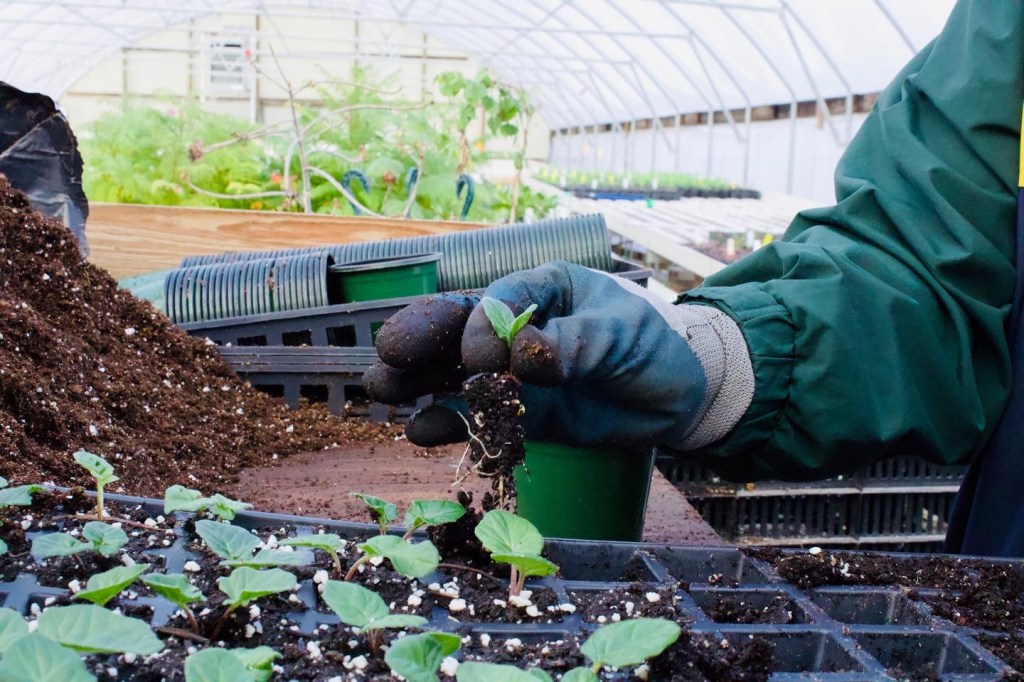
He describes the nursery’s philosophy as “laser-focused on tough plants for Southern gardens.” Many of these plants come from older family landscapes and have survived through generations. Powell warns that if the industry focuses only on the newest introductions, gardeners “risk losing not only great plants but our Southern garden heritage.” To him, heirloom plants serve as living records of the past and reflect the traditions of Southern gardens.
Visitors often tell Powell that the educational approach is what makes Petals from the Past unique, he says. The display gardens allow customers to see how plants respond to Alabama’s heat, humidity, and soil conditions.
The nursery also hosts workshops throughout the year to help gardeners learn new skills. “Our educational approach to gardening makes us a unique nursery,” he said. Over time, these classes have become a core part of the nursery’s identity.
Many plants in the nursery’s collection come with stories that connect them to the gardeners who first grew them. Some of those gardeners are no longer alive, but their plants continue to thrive in Jemison.
One example is a deep red climbing rose called Ruth’s Red Climber, a gift from the late Charleston gardener Ruth Knopf. “These are extra special because,” Powell said. “While that gardener friend is no longer living, they live on in our display gardens.”
The nursery also preserves plants that hold significance within its own history. Powell said he is motivated by the idea that every plant represents a memory or lesson worth carrying forward. “When we save a plant, we are saving a story,” he said. Protecting those stories has become a key part of the nurseries mission.
“When we save a plant, we are saving a story.”
-Jason Powell, Owner of ‘Petals from the Past’
‘Not just a hobby’
Running Petals from the Past requires both creative vision and precise organization. Powell credits his family and staff for keeping the operation running smoothly.
“Running a nursery is both a science and an art. Thankfully my whole family is involved, and we divide the many responsibilities in operating this business across each of us so that no one person has to carry the whole load,” he said. “In addition, we are so fortunate to work with the most talented crew that I know of in this business. With such talented individuals we can grow our plant material, maintain display gardens, operate a retail and mail-order nursery and host workshops and classes year around.”
The team maintains 25 acres of display gardens, manages propagation, prepares plants for retail and mail-order customers, and handles a full schedule of classes and events. By dividing responsibilities, they ensure that no single person carries the entire workload.
Powell begins each day with a 7 a.m. walk-through of the growing areas, retail spaces and gardens. The quiet routine gives him a chance to observe the landscape as it wakes up. By 9 a.m., the nursery opens to the public, and the day becomes a blend of customer assistance, transplanting, propagation and problem-solving.
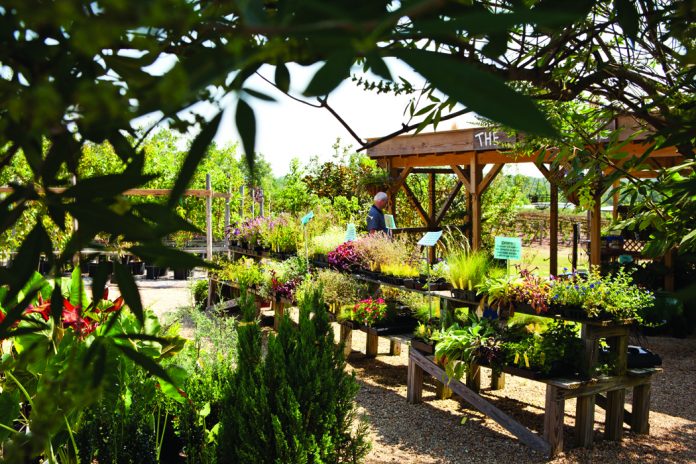
Powell embraces the pace, and he approaches each day as an opportunity to learn. “There is never a day I am not learning something new,” he said.
The nursery has faced challenges over the years. The most significant was the COVID-19 pandemic, which dramatically changed the way people approached gardening. Powell said the experience revealed how essential gardening had become for many people.
“We learned that for so many people gardening is not just a hobby. It is a necessity that helps them physically and mentally,” he said. The renewed interest reinforced the nursery’s commitment to education and community.
Looking ahead, Powell hopes Petals from the Past continues to serve as a sanctuary and a source of guidance for future generations. He wants it to remain a place where people can find tough plants, trustworthy information and a sense of calm.
His hope is that the nursery continues to be “a positive influence in our whole gardening community,” — a place where Southern heritage and horticultural knowledge continue to grow.
 Vallo Vision News