
Story By: Brayden George
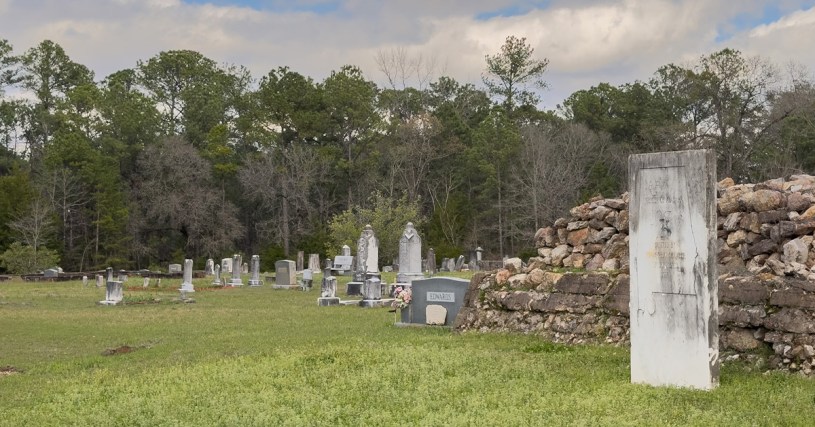
MONTEVALLO, Ala. – Tucked inside a Montevallo cemetery, about a quarter mile off of Alabama Highway 25, stands a monument long forgotten by many. The “Center of Alabama” monument erected over 70 years ago now stands decaying.
The city of Montevallo was originally deemed the geographic center of Alabama from the state’s founding in 1819. The town took some pride in this, with another plaque noting the same claim to fame located on the steps of Main Hall on the University of Montevallo.
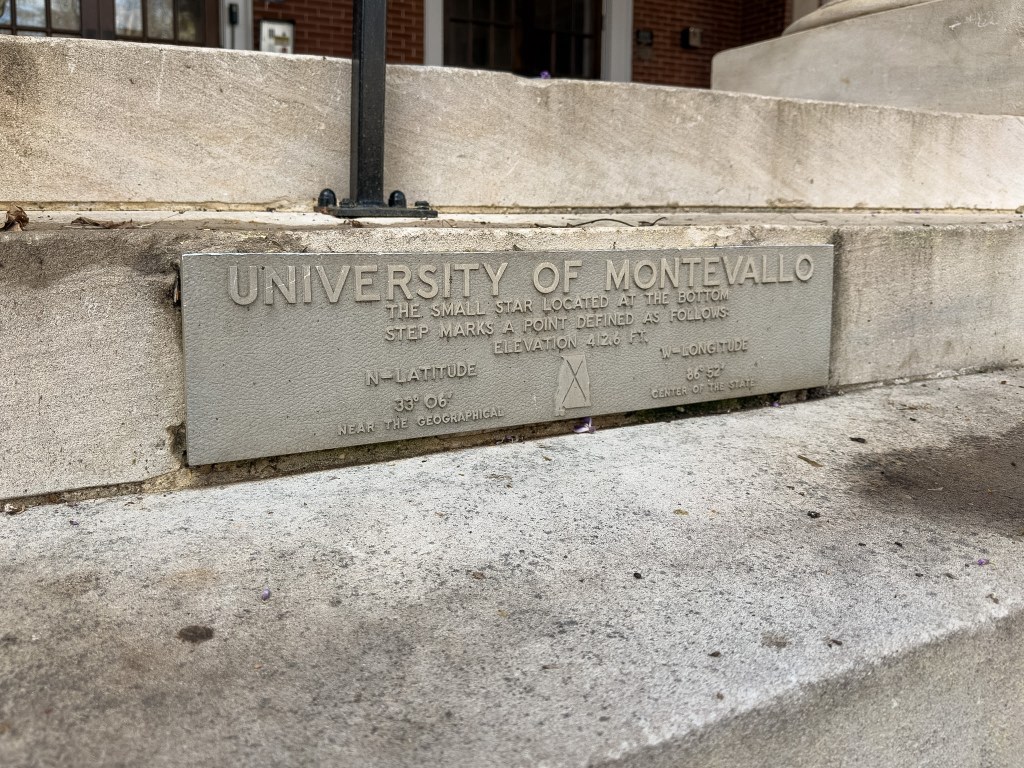
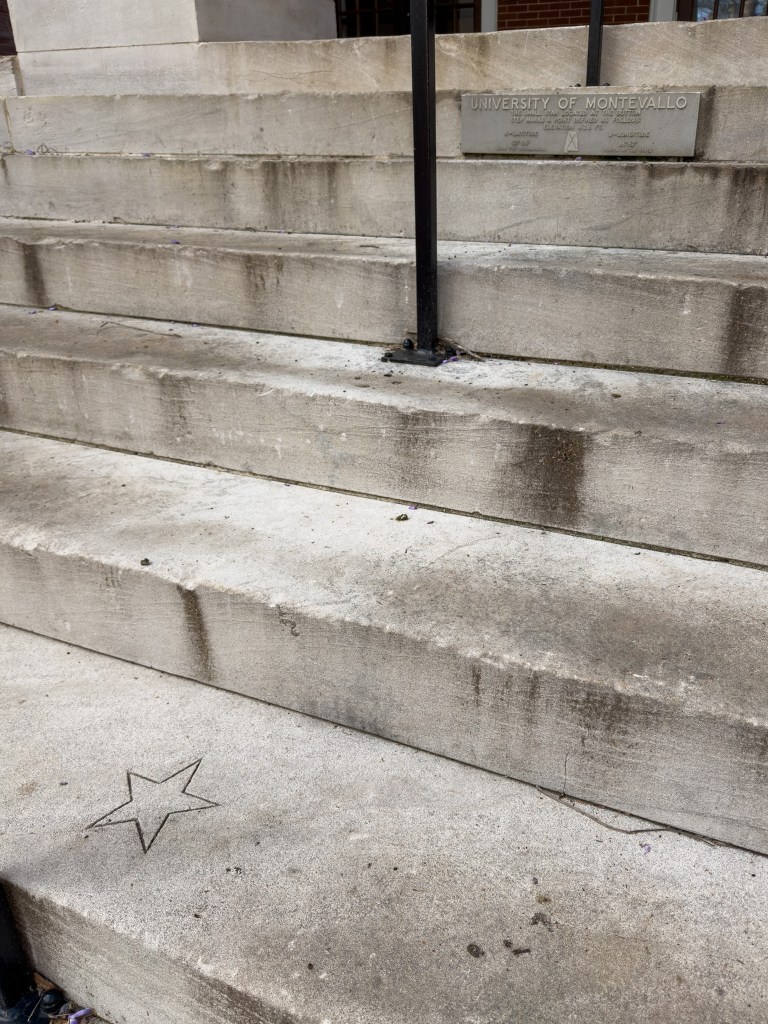
However, in 1953, the city would lose this distinction. Following the Submerged Lands Act of 1953, the gulf coast states gained offshore territory, thereby increasing the states geographic area.
For Alabama, the addition was three miles of land south of the state’s original border. Those extra miles to the south would ultimately cause the geographic center of the state to migrate three miles south, outside of Montevallo and outside of Shelby County all together.
This change didn’t sit right with the leaders of Montevallo who had considered themselves the center of the state for quite some time. In defiance, the Chamber of Commerce erected the monument in Reynolds Cemetery two years after the Act was passed.
For 68 years, the monument remained standing, its (incorrect) physical claim unopposed. However, in July of 2023 the city of Clanton would unveil a monument to challenge Montevallo’s claim.
The new monument stands in Corner Park in downtown Clanton, across the street from the Chilton County courthouse.
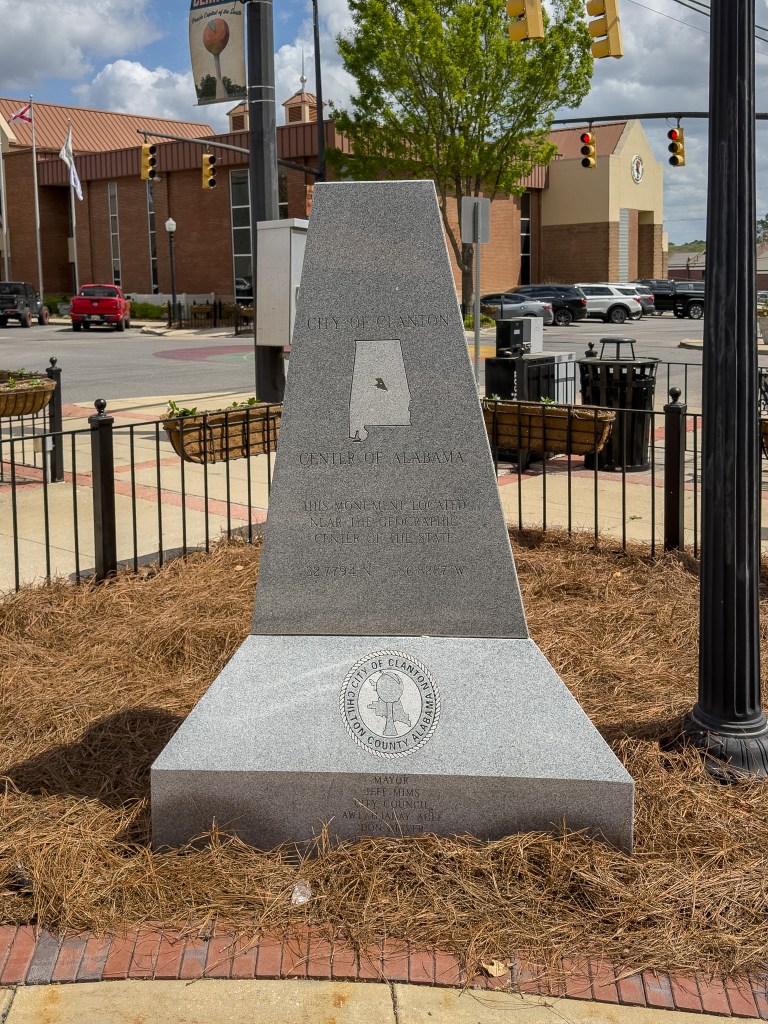
Engraved on the monument are the coordinates of the modern geographic center of Alabama: 32.7764, -86.8287.
Despite the differences in land claims, and rival monuments, the truth of the matter is the coordinates for the geographic center of the state place you in neither Clanton nor Montevallo. The true center, calculated by the “center of gravity” calculation, resides on private property in the small town of Maplesville
Today, all three markers remain. Each representing how geography, law and history can all shape the way communities build hometown pride and tell their stories.

